Guides
Which IRS deductions can an American auto repair shop claim?
Auto repair shop tax deductions cover Section 179 equipment, Publication 946 depreciation, mileage, tools and payroll, filed on Schedule C and employment tax forms.
What to take away
- Auto repair shop tax deductions are ordinary and necessary costs: tools, lifts, parts, rent, wages, training and the business share of vehicle use.
- Section 179 lets you write off qualifying equipment in the year you place it in service, up to the annual limit, instead of spreading the cost over years.
- Publication 946, the IRS depreciation guide, covers recovery periods, conventions and Section 179 elections for shop equipment and vehicles.
- Business mileage and personal mileage must be split; a log is the only defense that holds up.
- One EIN, separate bank accounts and a written record of each purchase do more to protect a claim than any tax software setting.
What an American auto repair shop can actually deduct, and what it cannot
The test for every line on your return is ordinary and necessary. An expense is ordinary if other shops in your trade spend on it, and necessary if it helps you run the business. The IRS guidance on deducting business expenses states that test plainly. The dollar limits cited below reflect tax year 2020; confirm current-year amounts with the IRS before you file.
It is the same test a shop in Phoenix or Detroit faces.
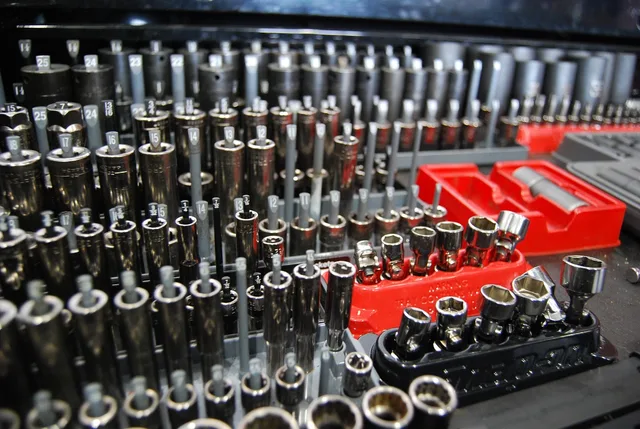
Deductible costs at a typical independent shop include hand tools, diagnostic scanners, lifts, compressors and oil and fluid inventory. Shop supplies, uniforms, rent, utilities and insurance belong on that list as well.
You can also deduct the business portion of a cell phone, internet service, trade magazine subscriptions, ASE certification fees and continuing education. Bank fees, merchant processing charges and loan interest on equipment financing belong on the return too.
Some costs are not deductible as written. Personal groceries, family travel, your own commuting miles between home and the shop, and fines are out. So are federal income taxes you pay, and political contributions.
Capital items are the common confusion. A lift is not a supply. It is property used in the business for more than a year, so it goes through depreciation or Section 179 rather than a supplies line. The Publication 535 business expense rules explain which costs must be capitalized.
Meals sit in the middle. Meals with a customer or a vendor while discussing business are generally deductible at 50 percent, and the receipt should name who was there and why.
Parts you buy for a customer's car are cost of goods sold, not a general expense. They reduce gross receipts on Schedule C through the cost of goods sold section. Track them by invoice so the number holds up.
If your books are already a mess, start with auto repair shop equipment to get receipts, parts and payroll into one place before you claim anything.
| Cost | How it is treated |
|---|---|
| Hand tools under your limit | Deducted as supplies or under Section 179 |
| Vehicle lift, alignment rack | Capital asset, Section 179 or depreciation |
| Parts for customer vehicles | Cost of goods sold |
| Shop rent, utilities, insurance | Current expense |
| Owner commuting miles | Not deductible |
| Customer business meals | 50 percent deductible |
Section 179 and bonus depreciation on lifts, diagnostic tools and shop equipment
Section 179 lets you deduct the full cost of qualifying property in the year you place it in service, up to the annual dollar limit of $1,040,000 for tax year 2020 and within the taxable income limit. For a shop buying a two-post lift, a scan tool or a tire machine, that can move a large deduction into the current year.
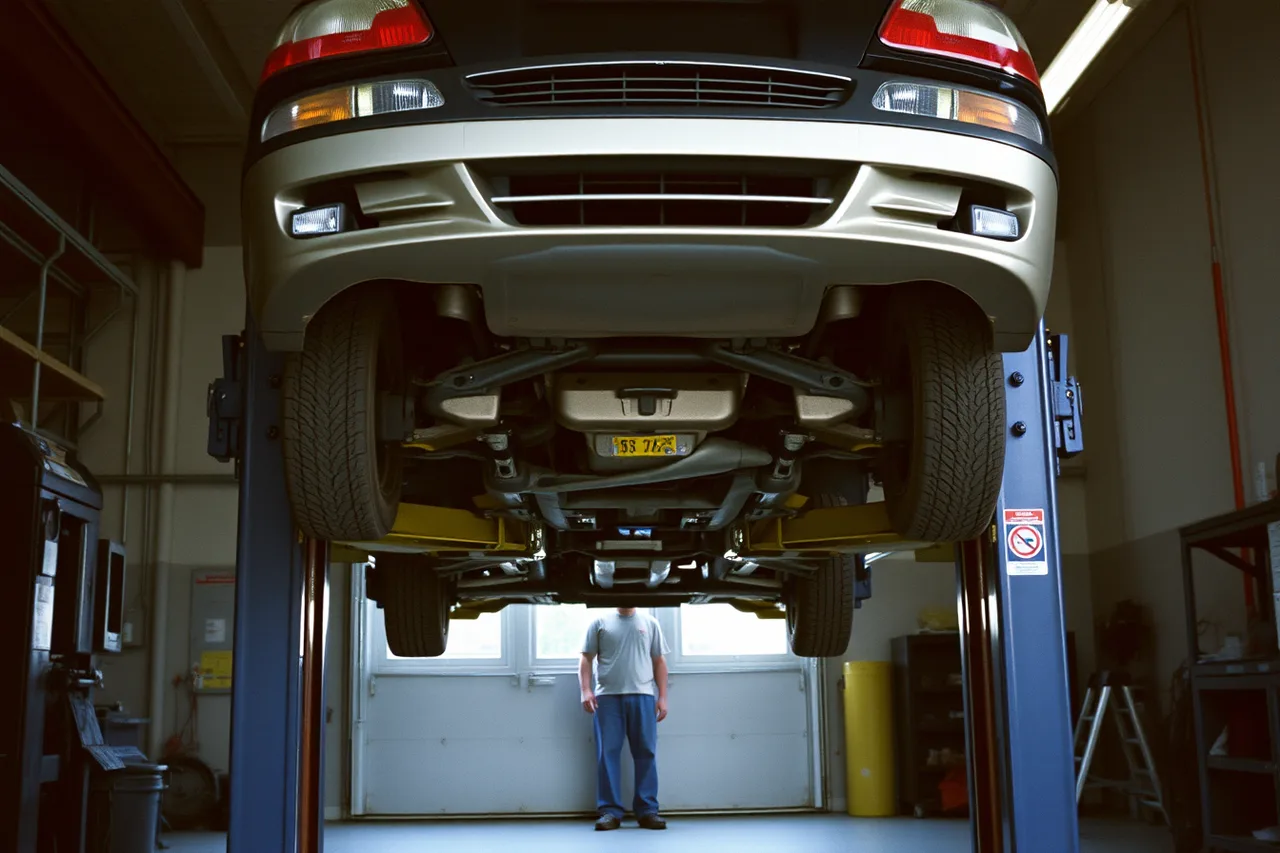
Qualifying property is tangible personal property used in the business. Lifts, compressors, welders, diagnostic platforms, shop computers and service vehicles generally qualify. Property used mostly outside the United States does not.
The deduction cannot create a loss on your return. It is capped at your taxable business income from active trades or businesses. If the shop had a slow year, some of the write-off may carry forward instead of applying now.
Bonus depreciation is the alternative. It applies to a set percentage of the cost of qualifying property, which changes by tax year under current law, and does not carry the same taxable income limit. Many owners use bonus depreciation when income is thin and Section 179 when income is strong.
Both routes require the asset to be placed in service, not merely ordered. A lift sitting in a crate in the back bay is not yet deductible. The date it is bolted down and working is the date that matters.
Keep the invoice, the payment record and a photo of the installed equipment. Note the serial number. If the IRS asks, the question is whether the asset exists and is used in the trade.
An example: a shop buys a $9,000 alignment rack and places it in service in March. With enough taxable income, Section 179 can take the full cost that year. Without it, the Publication 946 depreciation rules spread the cost across a recovery period.
Section 179 shop equipment elections are made on the return for the year the property is placed in service. Your tax preparer files the election form with that return, and the choice generally sticks once made.
Equipment bought with an SBA loan still qualifies. The loan is financing; the deduction is about the asset. Interest on the loan is a separate deduction.
Depreciating leasehold improvements, compressors and shop vehicles under Publication 946
Publication 946 depreciation rules tell you how to recover the cost of property that wears out over years. You need the cost basis, the date placed in service, the recovery period and the method.
Most shop equipment falls into a five or seven year recovery period under the modified accelerated cost recovery system. Computers and some high-tech tools are typically five year property. Office furniture is seven year property.
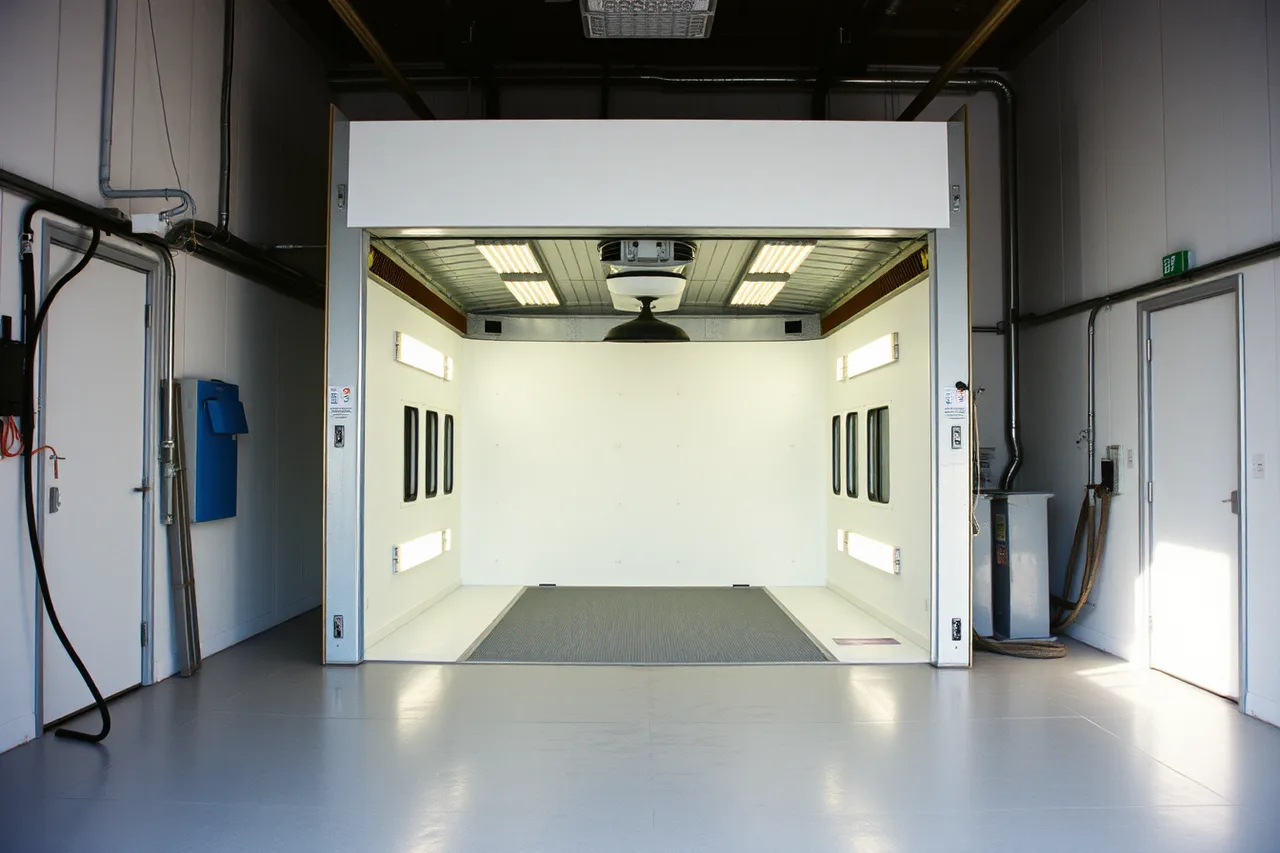
Leasehold improvements are different. If you rent a bay and pay to add a paint booth, epoxy floors, wiring or a customer waiting area, those improvements generally depreciate over the shorter of the lease term or a set recovery period.
Qualified improvement property, which covers interior improvements to a nonresidential building, has been treated as 15 year property since the 2017 tax law change. That matters if you remodel a leased building rather than own it.
Shop vehicles follow the same logic. A service truck or tow vehicle used only for business is depreciable property. If you also drive it personally, only the business percentage of the cost is recoverable.
There is a first year limit on passenger vehicles, which is why many shops buy trucks and vans rated above the passenger car threshold. A heavy pickup or cargo van is not subject to the same cap.
Depreciation starts in the month or year the asset is placed in service, and the convention you choose changes the first year amount. Half year convention is the default for most shop equipment.
When you sell or trade an asset, the depreciation you claimed reduces its basis, and the sale can produce ordinary income to that extent. Keep the depreciation schedule for the life of the asset plus the years the return stays open.
If you are still deciding what to buy first, the real startup costs walk through the equipment that matters most in the first year.
Vehicle mileage, fuel and tool costs: separating business from personal use
You have two ways to account for a vehicle: actual expenses or the standard mileage rate. Actual expenses include fuel, insurance, repairs, tires and depreciation. The standard mileage rate is a per-mile figure the IRS publishes each year; check the current rate before you claim.
Whichever you choose, you must split business miles from personal miles. A single vehicle used for both needs a log showing date, destination, purpose and odometer readings.
Commuting from home to the shop is personal, even if you own the business. Driving from the shop to a customer site, a parts supplier or a training class is business.
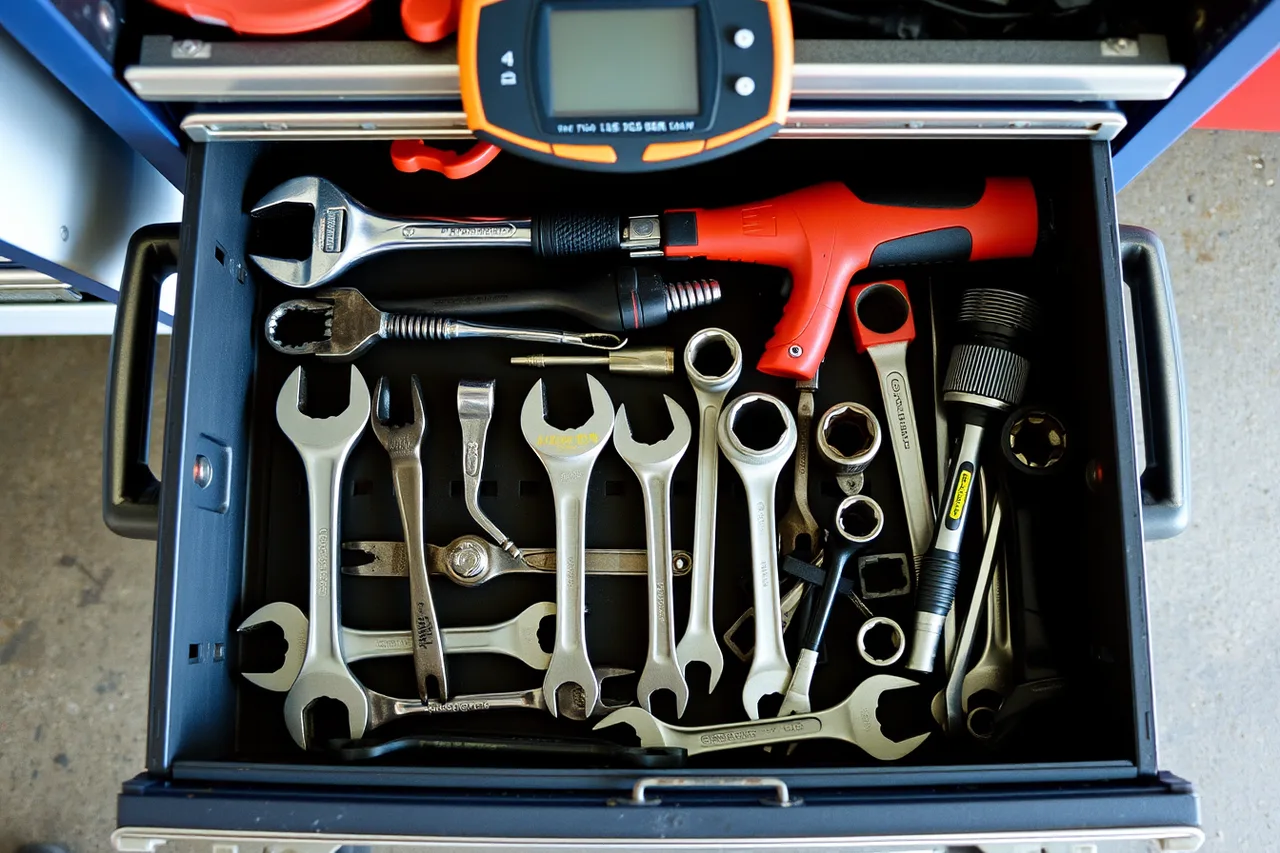
Tool costs are usually straightforward. Hand tools with a short useful life are deducted as supplies. A rolling toolbox, a diagnostic platform or a scope can be capitalized and depreciated, or written off under Section 179.
Technicians who buy their own tools and are not reimbursed may be able to deduct unreimbursed employee expenses, but the rules changed after 2017 and most employees no longer can. Reimbursing technicians through an accountable plan keeps the deduction with the shop.
Fuel for shop equipment, oil for the waste oil heater and DEF for a diesel truck are business expenses. Fuel for your personal car is not, and mixing the two cards invites a problem.
Parts used for your own vehicle or a family member's vehicle are not deductible. If the shop does the work for free, the cost of the parts stays in the business and is not a customer cost of goods sold item. Handle it deliberately.
A worked example: a service van drives 18,000 business miles and 6,000 personal miles in a year. With the standard rate, only the business miles count. Under actual expenses, only 75 percent of fuel, insurance and repairs count. The log decides which number you can defend.
If your margins are thin, the mileage and tool decisions feed straight into the break-even point, which margins, explained down covers in detail.
Payroll, uniforms, training and ASE certification fees as deductible expenses
Wages paid to technicians, service writers and front desk staff are deductible, and so are the employer taxes on those wages. That includes Social Security and Medicare tax the shop pays as employer.

You can also deduct workers compensation premiums, health plan contributions, retirement plan contributions and payroll service fees. These are ordinary costs of employing people in a repair business.
Uniforms are deductible when they are required for work and not adaptable to general wear. Shop shirts with a logo, coveralls and safety boots qualify. A plain jacket the owner also wears on weekends is a weaker claim.
Training costs are deductible when they maintain or improve skills in the shop's current trade. Sending a technician to a manufacturer course on a new platform qualifies. A course that prepares someone for a brand new career generally does not.
ASE certification fees for your technicians are a deductible business expense, and so is the cost of the study material and the testing time you pay for. The National Institute for Automotive Service Excellence sets the certification standards, and keeping certifications current is a normal cost of doing business.
Tool allowances paid to technicians are deductible wages if they are compensation, and deductible reimbursements if they run through an accountable plan. The distinction changes the tax treatment for the technician.
Contract labor is not payroll. If you pay an independent contractor, you generally file a Form 1099-NEC and do not withhold taxes. Misclassifying a regular technician as a contractor is one of the most expensive errors a shop can make.
Payroll is often the largest single line at a shop. The payroll: rates and total labor cost breakdown shows how wages, taxes and benefits stack up before you decide what to deduct.
Which IRS forms a shop files, from Schedule C to employment tax returns
A sole proprietor shop reports income and expenses on Schedule C and files it with Form 1040. The net profit flows to the owner's personal return and is subject to self-employment tax.
A single member LLC is taxed the same way by default. A partnership files Form 1065 and issues Schedule K-1 to each partner. An S corporation files Form 1120-S and reports shareholder wages on Form W-2.
Once you have employees, employment tax returns enter the picture. Form 941 is filed quarterly to report wages and withheld income, Social Security and Medicare taxes. Form 944 is the annual version for very small employers.
Form 940 reports federal unemployment tax annually. Form W-2 goes to each employee, and Form W-3 transmits the totals to the Social Security Administration.
Form 1099-NEC reports payments of $600 or more to nonemployees, including some subcontractors and rent paid to certain parties. Missing it can cost you a deduction for the payment.
Publication 334 small business filing basics is the starting reference for which forms apply to your entity type, and it explains the recordkeeping the return depends on.
Depreciation and Section 179 elections are reported on Form 4562 and attached to the return. The form asks for the asset description, date placed in service, cost, method and current year deduction.
If you sell business property, Form 4797 reports the gain or loss. If you claim the home office deduction, Form 8829 supports it.
State obligations sit alongside federal ones. Most states require a sales tax permit for parts and sometimes labor, and many require annual reports for an LLC or corporation. Check your state revenue department and secretary of state.
Getting an EIN and setting up records before the first deduction is claimed
An employer identification number is how the IRS identifies your business. You need one to hire employees, open a business bank account, file employment tax returns and in many cases to get a business license.
Applying is free and done directly with the IRS. The IRS page on how to get an employer identification number covers the online application, which issues the number immediately for most US-based entities.
Do not pay a third party for an EIN. Services that charge for it are reselling a free application, and some then use your details for other filings.
Once the EIN is issued, open a dedicated business checking account and a business credit card. Every deductible expense should be traceable to that account, and nothing personal should run through it.
Set up a filing system by month and by category: parts invoices, tool receipts, utility bills, payroll reports, vehicle logs and bank statements. Digital copies are fine if they are complete and readable.
Write down your accounting method. Cash basis is common for small shops, and it means you deduct expenses when paid and report income when received. Accrual basis matches income and expenses to the period.
Choose your entity and tax year before the first big purchase. The entity type changes which return you file and how Section 179 flows to the owners.
If you are still forming the business, the prices for profit guide connects pricing decisions to the cash you will need for equipment and payroll.
Mistakes that trigger an audit, and the documentation that defends a claim
The largest single risk is claiming personal expenses as business costs. Family meals, personal travel, household utilities and personal vehicle fuel all stand out when they run through a business account.
Second is a missing mileage log. A reconstructed log written the week before an audit is weak. A contemporaneous log, even a simple notebook, is strong.
Third is treating a capital asset as a supply. Writing off a $12,000 lift as shop supplies in one line invites a question about your accounting method and your depreciation schedule.
Fourth is paying technicians as contractors when they work set hours at your shop with your equipment. That is an employment relationship, and the penalties include back taxes and interest.
Fifth is unreported cash. Repair shops take cash, and deposits that do not match reported income are one of the easiest mismatches for an examiner to find.
Sixth is commingling funds. When the business account pays personal bills, every deduction on the return becomes harder to defend.
Here is the documentation that holds up:
- Bank and credit card statements for every business account
- Parts invoices matched to customer repair orders
- Equipment invoices with date placed in service and serial numbers
- Vehicle logs with date, destination, purpose and odometer
- Payroll reports, W-2s, W-3 and quarterly Form 941 filings
- Depreciation schedule updated each year
- Receipts for meals showing who attended and the business purpose
Keep returns and supporting records for at least three years after filing, and longer for assets you depreciate. The clock starts later if you underreport income substantially.
A calm audit is mostly a records audit. If the paperwork exists and matches the return, most questions end with a copy of the invoice.
Common questions
Can an auto repair shop deduct tools and equipment in one year?
Often yes. Hand tools and short life items are supplies. Larger equipment can go through Section 179 or bonus depreciation in the year it is placed in service, subject to the annual limit and your taxable income.
Is a shop vehicle deductible if the owner also drives it?
Only the business portion. Keep a log that separates business miles from personal miles, and apply that percentage to fuel, insurance, repairs and depreciation or use the standard mileage rate for the business miles.
Do I need an EIN to claim business deductions?
A sole proprietor without employees can file under a Social Security number. An EIN is required for payroll, most business bank accounts and many licenses, and it is free to obtain from the IRS.
Are ASE certification fees deductible?
Yes, when they maintain or improve skills used in the shop's current trade. The fees, study materials and related training costs are ordinary business expenses for a repair shop.
Which form reports depreciation and Section 179?
Form 4562. It is attached to your business return, whether that is Schedule C with Form 1040, Form 1065, Form 1120-S or Form 1120.
Can I deduct rent for a shop I lease?
Yes. Rent is a current expense. Improvements you make to the leased space are treated differently and generally depreciate over the applicable recovery period under Publication 946.