Guides
A guide to Phoenix heat and the belts, batteries and cooling it wears out
Phoenix auto repair demand peaks when 110F days kill belts, batteries and cooling parts, so shops schedule summer bays early and price fairly.
What to take away
- Phoenix auto repair demand climbs through the long hot season because heat kills belts, batteries and cooling parts faster here than almost anywhere else in the country.
- Phoenix highs run from the low 100s in May to 106F or hotter at the July and August peak, and overnight lows in the high 80s stop parts from ever cooling down.
- Battery failure rates jump in sustained heat, and belts, hoses, radiators and water pumps all wear faster under the hood in Arizona summer car repairs.
- Spreading belt and battery work across spring and early summer keeps June bays from jamming, and a written heat plan keeps technicians safe.
- Price heat-driven work from measured labor time and parts cost, not from how desperate a stranded driver sounds.
What Phoenix auto repair demand looks like when the thermometer passes 110F
Phoenix does not have a mild summer. May highs sit near 100F, June and July push past 106F, and afternoon readings of 110F or more are routine in late June through August. Overnight lows often hold in the high 80s, so a car parked outside never really cools.
That pattern drives Phoenix auto repair demand in a way shops in cooler metros do not see. Heat does not break one part on one day. It ages every rubber and plastic component under the hood at the same time, then finishes the weakest one.
A driver who ignored a soft belt in April calls in July with a snapped one. Multiply that across a metro of more than a million vehicles and the summer board fills itself.
NOAA tracks heat as a weather hazard and its vehicle guidance notes that extreme heat stresses batteries, tires and cooling systems at the same time. See NOAA weather information on heat impacts for the general pattern.
Demand also arrives in waves. A run of 112F days produces a spike of tow-ins, then a quieter stretch, then another spike. Shops that staff for the average week drown in the spikes. Shops that plan for them do not.
If you want to see where heat work sits against other lines, our breakdown of services ranked by profit puts cooling and electrical near the top of the list.
How sustained heat shortens serpentine belt, hose and battery life
Heat is harder on a serpentine belt than cold ever is. Underhood temperatures in Phoenix traffic can run well above ambient, and the rubber compound in a belt hardens, glazes and cracks.
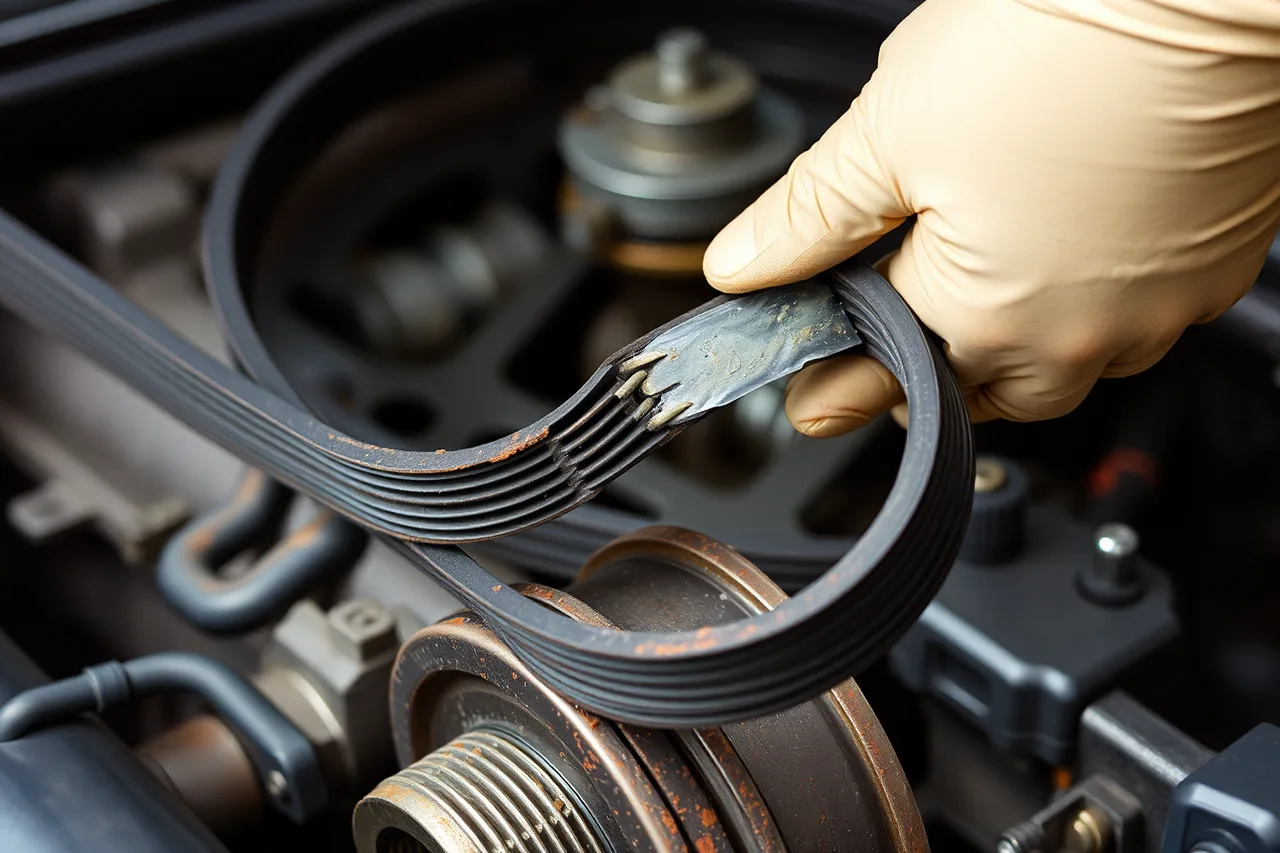
A belt that lasts four or five years in a mild climate can show real cracking in two or three here. The failure is rarely gradual at the end: the belt sheds a rib, slips, and takes the water pump or alternator with it.
Hoses fail the same way. Upper and lower radiator hoses, heater hoses and the small bypass lines all cook. A hose that feels firm and fine in March can split in July.
Batteries are the clearest case. Sustained heat speeds up the internal corrosion and grid damage that shorten battery life, so battery failure rates climb through the hot months. Many Phoenix drivers replace a battery every two to three years instead of the four or five a cooler market allows.
The failure mode fools people. Heat kills the battery slowly through summer, then the first cool morning in autumn exposes it as a no-crank. Drivers blame the cold snap. The damage happened in August.
Tires belong in the same conversation. Federal standards set minimum performance and labeling rules, and desert heat plus underinflation is a bad pair. NHTSA's tire safety ratings and awareness guidance covers the standards and the shop's role in checking them.
A simple inspection routine catches most of this before it strands anyone:
- Check belt rib condition and tension at every oil change from May through September
- Squeeze and flex all coolant hoses while the engine is cool
- Test battery state of health, not just voltage, on any car over two years old
- Check tire pressures and sidewall condition on every summer ticket
- Note cracked plastic tanks, clamps and thermostat housings while you are in there
Cooling system failures: radiators, water pumps and refrigerant work in Arizona heat
The cooling system takes the worst of it. Radiators, water pumps, thermostats, coolant hoses, fans and the AC refrigerant circuit all work harder in Phoenix than the designers assumed.
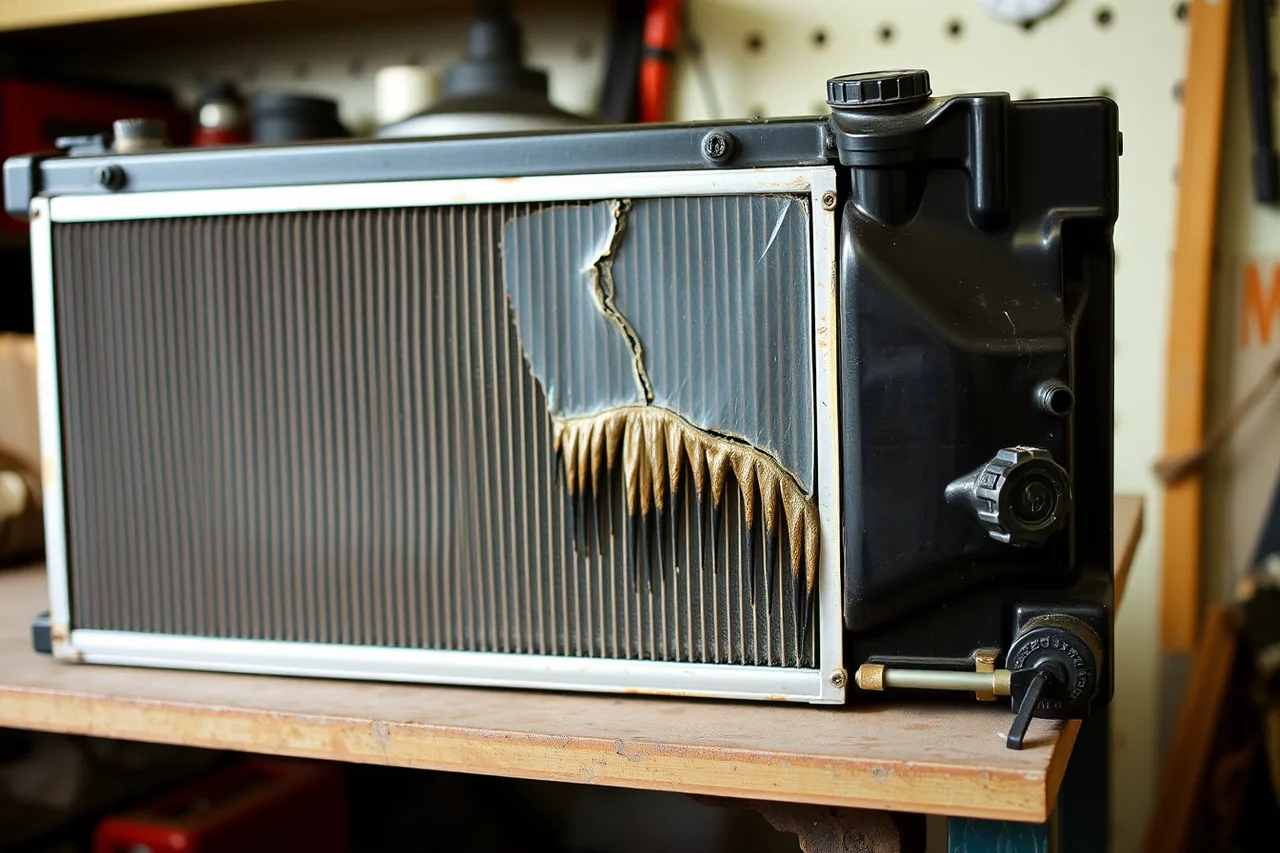
Radiators clog and crack. Plastic end tanks go brittle after years of heat cycles, and a hairline crack becomes a leak the first time the system holds pressure on a 110F afternoon.
Water pumps fail at the bearing or the seal. A pump that is merely noisy in spring can seize in July and throw the belt, which turns a cooling job into a cooling and belt job.
Thermostats stick. Fans quit. Coolant that has never been changed turns acidic and eats the radiator from the inside. Each of these is a Phoenix cooling system repair that walks in on its own schedule.
AC work is its own summer category. Refrigerant leaks show up when the system runs hardest, and a driver who has tolerated weak cooling since May books the moment the cabin stops getting cold.
Heat also exposes safety defects that manufacturers have recalled. Shops should run every VIN through the federal recall lookup before returning a car. NHTSA's recall lookup for vehicles and equipment is the free tool for that check, and it takes a minute at the counter.
Stack these jobs in the right order and a cooling ticket becomes predictable. Pressure test first, then locate the leak and quote the parts. Replace the failed component and any hose or clamp that is already brittle. Refill with the correct coolant and verify fan operation at temperature.
Scheduling seasonal work so summer bays are not jammed in June
Every Phoenix shop knows the June problem. The first 110F week arrives, the phone does not stop, and the board is full by Tuesday with no room for the cars already promised.
The fix is to move belt, hose and battery work into April and May, before the failures happen. A presummer inspection offer gives customers a reason to come in during the slow shoulder weeks.
That only works if the schedule can absorb the extra tickets. Booking jobs without gaps or overruns is the difference between a full board and a chaotic one.
A workable seasonal approach:
Scheduling seasonal work
- In March, pull service history and flag every car with a battery over two years old or a belt over three years old.
- In April, run a preseason cooling and belt inspection promotion at a set price.
- In May, schedule the flagged replacements before the first heat wave, not after.
- In June through August, hold two bays for same-day cooling and no-start work.
- In September, run the reverse campaign, because the first cool morning exposes every battery the summer killed.
That is the whole seasonal auto repair scheduling idea. Do the predictable work early, keep capacity for the unpredictable work, and stop treating June like a surprise.
Shops that plan this way also read their market better. Our piece on how auto repair shop equipment holds up for 2027 explains why heat-driven metros behave differently from the national average.
Pricing heat-driven repairs without overcharging a stranded customer
A driver on the side of the road in 112F is not shopping on price. That is exactly when a shop can damage its reputation, and Phoenix has a long memory for shops that do it.
Price the job from measured labor time and real parts cost. A water pump on a transverse V6 is a known book time. A belt and tensioner is a known job. There is no reason for the number to change because the customer is sweating.
Build the quote in writing before work starts. List the failed part, the labor, the coolant or refrigerant, and any related hose or clamp you recommend replacing while the system is open.
Give the customer the choice on the optional items. A brittle hose is a recommendation, not a hostage situation. Most drivers take it when the reason is explained plainly.
Emergency and after-hours calls can carry a published surcharge. Publish it. A posted tow-in fee is a business decision. A surprise fee is a complaint to the Better Business Bureau.
What to charge for heat work should track your actual costs, including the extra coolant, the shop supplies and the time a tech spends waiting for a system to cool before opening it. Our guide to What to charge walks through margin math for service lines like these.
One more pricing habit helps in a heat market: quote the full cooling system refresh as a package and the single failed part as an option. Customers understand a package price better than four separate line items.
Protecting technicians from heat illness while the bay stays open
A Phoenix bay in August is a hot environment, and the federal safety agency treats it as one. OSHA's heat illness guidance for indoor and outdoor work sets out the protections employers owe workers in exactly these conditions.
The practical version for a shop:
- Water within arm's reach of every bay, restocked daily, not a single cooler by the office door.
- Shade and fans for any work done outside the bay, and a cool break room that is actually cool.
- Acclimatization for new hires, with lighter loads in their first week.
- A buddy system so no tech works alone on a hot job.
- Training that covers heat exhaustion and heat stroke symptoms, and the authority to stop work.
Heat illness prevention is not only a compliance item. A tech who is dizzy and dehydrated makes mistakes, and a mistake on a hot engine or a raised vehicle is how people get hurt.
Schedule the heaviest jobs for early morning. Move diagnostic and paperwork work to the afternoon peak. Rotate techs out of the hottest bays rather than leaving one person in there all day.
Track the numbers that matter: water consumed, breaks taken, and any near-miss reported. If nobody has reported feeling off all summer, your crew is either lucky or not telling you.
Common questions
How hot does Phoenix get in summer?
Highs run from about 100F in May to 106F or hotter at the July and August peak, with 110F afternoons common in midsummer and overnight lows often in the high 80s.
Why do car batteries fail more often in Phoenix?
Sustained heat speeds internal corrosion and grid damage, so battery life shortens. Many drivers here replace a battery every two to three years, and the failure often shows up on the first cool morning.
Which cooling parts fail most in Arizona heat?
Radiators with plastic end tanks, water pumps, thermostats, coolant hoses and cooling fans. AC refrigerant leaks also surface when the system runs hardest in July and August.
When should a Phoenix shop schedule belt and battery work?
In April and May, before the first heat wave. Flagging older belts and batteries in March and replacing them in spring keeps June bays open for same-day cooling and no-start jobs.
Can a shop charge more for a heat emergency?
A published after-hours or tow-in surcharge is fine. Pricing should still come from measured labor time and parts cost, with the quote in writing before work begins.
What heat protections do technicians need?
Water within reach, shade and fans, a cool break room, acclimatization for new hires, a buddy system, and training that lets any tech stop work when symptoms start.
Shops that want to know which locations carry this kind of steady heat work can compare markets using the tests in our guide on how separate real demand from empty traffic.