Guides
Canadian winter prep compared with US northern shop practice
Winter auto repair prep differs sharply at the Canadian border, from block heaters and battery blankets to tire rules, coolant choices and freeze scheduling.
What to take away
- Winter auto repair prep in Canadian shops centers on block heaters, battery blankets and cold-start testing, while Michigan and New York shops lean on battery replacement and tire changeovers.
- Ontario and Quebec winter tire rules drive a dense October and November changeover wave; Canadian border states rely on driver choice and weather forecasts.
- Cold-weather battery and charging system testing is the highest-value winter service on both sides, with conductance testers and load tests standard in Canadian shops.
- Coolant freeze point, oil viscosity and undercarriage washing separate shops that survive salt season from those that see comeback repairs.
- Booking winter prep before the first hard freeze matters more than any single repair, because bay time disappears once the first snow hits.
- Shops across the Canadian border states that adopt block heater installation and battery blanket service can capture cross-border and rural demand.
Why winter auto repair prep differs across the Canadian border
The border is a climate line as much as a political one. Canadian provinces from Ontario eastward see sustained deep cold, while the Canadian border states of Michigan, New York and New England get cold snaps that alternate with thaws. That difference shapes what shops stock, what they sell and when they schedule work.
A shop in Thunder Bay or Montreal expects weeks below zero Fahrenheit. A shop in Detroit or Buffalo expects a handful of those days plus freeze-thaw cycles that wreck undercarriages. The repair menu follows the weather, not the calendar.
Canadian drivers treat block heaters as factory equipment. In most Canadian border states they are an aftermarket add-on that only rural customers request. That single difference changes parts inventory, technician training and service pricing.
The NOAA weather information on winter impacts on vehicles shows how storm tracks and freeze lines shift demand across the Great Lakes region, which is why shops in the Canadian border states watch forecasts as closely as Canadian ones do.
Block heaters, battery blankets and cold-start practice in Canadian shops
A block heater warms engine coolant so the oil flows and the battery has less work to do. Canadian shops install them as a routine service, often with a battery blanket that keeps the battery case warm overnight. Together they cut cold-start wear and no-start calls.
Installation is not complicated, but it is not trivial either. The heater element goes into a freeze plug or a threaded port, the cord routes to the front bumper, and the technician checks for coolant leaks afterward. Most Canadian shops quote it as a fixed-price job.
Battery blankets wrap the battery in a heating pad that plugs into the same cord. In Prairie and northern Ontario practice, the two are sold as a package. In southern Ontario, shops often install only the block heater and skip the blanket.
Cold-start diagnosis is its own skill. A Canadian technician listens to cranking speed, checks glow plug operation on diesels, and verifies that the heater actually draws current. A dead block heater cord is a common find.
Block heater installation and battery blanket work are small tickets, but winter is where services ranked by profit sit at the top for cold markets. For US shops in the Canadian border states, both are low-cost add-ons that build loyalty with rural and cross-border customers.
Battery testing and charging system checks in extreme cold
Cold weather battery testing is the core of winter auto repair prep on both sides of the border. A battery that passes in July can fail at zero Fahrenheit because cold slows the chemical reaction and thickens the oil the starter must turn.
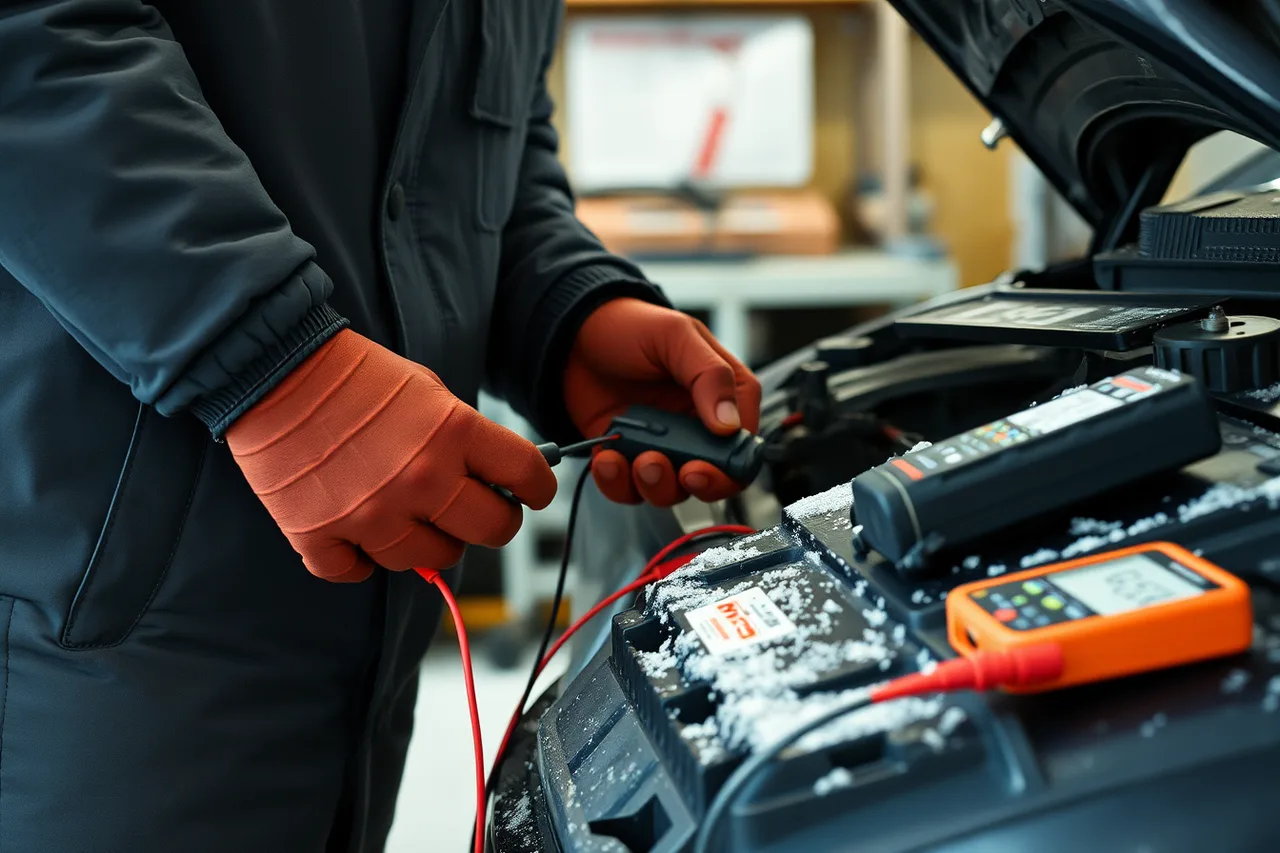
Canadian shops test with conductance testers and then confirm with a load test. They check state of charge, cold cranking amps against the battery label, and the alternator output under load. A weak alternator shows up as a battery that keeps dying.
Charging system checks include belt condition, tensioner wear and voltage drop on the ground circuit. A corroded ground strap mimics a failing alternator, and northern shops see plenty of those after a salt season.
Replacement advice follows the test, not the calendar. Canadian shops commonly recommend replacement when a battery falls below its rated cold cranking amps or shows more than a set age with marginal results. Shops in the Canadian border states follow similar rules but often wait for the first no-start call.
That waiting is expensive. A no-start tow and a same-day battery replacement cost the customer more than a scheduled test in October. Shops that push fall testing capture the work before the rush.
The BLS technician outlook shows steady employment for automotive service technicians and mechanics as the vehicle fleet ages, which supports adding winter specialists rather than generalists.
Winter tire rules and seasonal changeover volume on both sides
Quebec requires winter tires on passenger vehicles during a defined winter period, and British Columbia has similar rules on many routes. Ontario and most other provinces do not mandate them, but insurance discounts and driver habit push adoption high anyway.
Those rules create a predictable changeover wave. Canadian shops book tire swaps weeks ahead, stack storage racks, and run extended hours in October and November. Some shops dedicate a bay to changeovers and nothing else.
In the Canadian border states, winter tires are a choice. Changeover volume spikes after the first forecast snow and again in spring. Shops that do not pre-book tire work lose it to dealers and tire chains.
The federal tire safety standards and shop obligations during changeover season matter here. The TireWise winter tire guidance covers tread depth, pressure checks and the risks of mixing tire types on the same axle.
Changeover volume is also a scheduling problem. Tire work is fast, but it clogs bays and delays diagnostic jobs. Shops that separate tire lanes from repair lanes keep both moving without gaps or overruns.
Winter tire rules and changeover volume
Canadian shop practice
- Winter tire rules
- Mandatory in Quebec, route-based in BC
- Changeover peak
- Mid-October to late November
- Block heaters
- Routine, often factory
- Battery blankets
- Common in northern provinces
- Battery testing
- Scheduled fall testing
- Undercarriage wash
- Seasonal package
Canadian border states practice
- Winter tire rules
- No statewide mandate
- Changeover peak
- First snow event, then spring
- Block heaters
- Aftermarket, rural demand
- Battery blankets
- Rare outside far north
- Battery testing
- Reactive after no-starts
- Undercarriage wash
- Popular in salt-belt cities
What Michigan and New York shops do differently from Canadian practice
Michigan winter shop practice leans on salt. Road crews in Detroit and Grand Rapids spread heavily, and undercarriage corrosion drives brake line, subframe and exhaust work by spring. Shops sell undercarriage washes and rust inspections as winter prep.
New York winter car care varies by region. Buffalo and Syracuse see lake-effect snow and heavy salt, while New York City sees milder winters with more freeze-thaw. Shops in the city focus on battery and tire work, not block heaters.
Canadian shops, by contrast, plan for continuous cold rather than repeated thaw. They stock more cold-rated batteries, more block heater parts and more winter-grade oil. They also train technicians on cold-start diagnostics as a specialty.
Michigan and New York shops that want Canadian-style results can start with three changes: a fall battery testing push, a pre-booked tire schedule, and a block heater option for rural customers. Cold markets separate real demand from seasonal noise, and the shops that read the difference keep their bays full in December.
Labor supply matters too. Northern-state shops compete for technicians who can handle both electrical diagnosis and tire volume, and hiring stays tight in the coldest markets.
Coolant, oil viscosity and undercarriage wash routines for salt season
Coolant freeze point is the first check in any winter auto repair prep. A 50/50 mix protects most vehicles, but a weak mix can slush in the radiator and heater core. Canadian shops test with a refractometer, not a floating ball gauge.
Oil viscosity choices follow temperature. Canadian shops lean toward 0W grades in deep cold so the oil pumps quickly at start-up. Shops in the Canadian border states often use 5W grades, which handle their typical winter range.
The owner's manual is the final word. Shops that deviate without checking risk warranty disputes and cold-start noise complaints. A viscosity change is also a chance to inspect for leaks that cold makes worse.
What to charge for a winter prep package depends on local labor rates and parts cost. Canadian shops bundle the wash with an inspection, which raises the ticket without adding much bay time.
Brake lines, fuel lines and electrical grounds are the parts that fail after salt season. A wash routine plus an inspection catches them while the repair is still small.
Scheduling winter prep work before the first hard freeze
Winter prep is a capacity problem. Every shop in a cold market wants the same bays in the same six weeks. The shops that win book the work in September and October, before the first hard freeze.
Start with a target date. In most of the Canadian border states, the first hard freeze arrives between late October and mid-November. Canadian shops work to an earlier date, often mid-October, because the cold comes sooner.
Scheduling winter prep work
- Build a winter prep menu with battery test, coolant check, tire changeover, block heater option and undercarriage wash.
- Set a booking deadline eight weeks before the expected first freeze and market it to existing customers.
- Block tire-only lanes in the schedule so changeovers do not push out diagnostic work.
- Order cold-weather stock in Septemberbatteries, block heater kits, winter-grade oil and coolant.
- Train one technician on cold-start and charging system diagnosis before the rush.
- Track no-start calls and use them to sell fall testing the following year.
Winter prep also fits the broader shift in auto repair shop equipment, where maintenance work grows as the fleet ages and drivers keep cars longer.
A simple checklist keeps the front desk consistent:
- Battery conductance and load test completed
- Charging system output verified under load
- Coolant freeze point tested with a refractometer
- Oil viscosity confirmed against the owner's manual
- Tire tread depth and pressure recorded
- Block heater operation checked where fitted
- Undercarriage wash offered and scheduled
Shops that treat winter prep as a season, not a repair, smooth their cash flow and reduce emergency comebacks. The work is predictable, and predictability is what makes it profitable.