Guides
EPA and OSHA compliance auto shop: daily rules
EPA and OSHA compliance auto shop duties: RCRA waste rules, EPA ID numbers, HazCom, lockout/tagout, respirators, heat standards and records tied to work orders.
What to take away
- EPA and OSHA compliance auto shop duties involve different records: EPA waste files and OSHA worker-safety programs.
- Generator category depends on hazardous waste produced per month; used oil kept separate for recycling is generally excluded from that count.
- HazCom, lockout/tagout and respirator rules require written programs, training and specific records.
- Heat protections depend on the workplace and state rules; California names separate outdoor and indoor heat standards.
- Keep a compliance file with waste documents, safety programs and training records, and connect job-specific controls to the work order.
How EPA and OSHA duties split: environment vs workplace safety
Two federal agencies touch a repair shop, and their responsibilities differ. The Environmental Protection Agency (EPA) administers hazardous-waste requirements under the Resource Conservation and Recovery Act (RCRA), including 40 CFR Part 262 for hazardous-waste generators and Part 279 for used oil. The Occupational Safety and Health Administration (OSHA) oversees workplace hazards under federal workplace-safety requirements, including the standards in 29 CFR Part 1910.
That split matters for paperwork. EPA rules follow the waste, so manifests and accumulation dates are environmental records. OSHA rules follow the worker, so training logs, fit tests and lockout procedures are safety records. A shop that files them together usually loses one set.
Before opening, most states also require air permits, business licenses and sometimes a hazardous materials permit from the local fire authority. Those items sit in our guide to pre-launch rules and permits, which pairs well with this one.
Once you are running, the environmental side is mostly about storage and disposal. The safety side is mostly about how work is assigned, supervised and documented in the daily routine of a well-run shop.
Make compliance part of the shop’s work-order flow without treating the work order as a substitute for required records. Add fields or a linked checklist for job-specific hazards, controls, the employee responsible and completion; file shop-wide programs, waste records and training documents in the compliance system.
EPA hazardous waste generator categories for used oil, solvents and coolant
The EPA sorts hazardous-waste generators by how much they produce in a calendar month. A very small quantity generator (VSQG) generates 100 kilograms or less of hazardous waste, about 220 pounds. A small quantity generator (SQG) generates more than 100 kilograms but less than 1,000 kilograms.
EPA Generator Categories
Very Small
- Monthly limit
- ≤100 kg
- Acute waste
- —
- Typical shop
- Most independents
- Duties
- Basic
Small
- Monthly limit
- 100–1,000 kg
- Acute waste
- —
- Typical shop
- Busy oil shops
- Duties
- Tighter limits
Large
- Monthly limit
- ≥1,000 kg
- Acute waste
- >1 kg
- Typical shop
- Rare
- Duties
- More reporting
A large quantity generator (LQG) generates 1,000 kilograms or more of hazardous waste in a month, or at least 1 kilogram of acute hazardous waste or 100 kilograms of spill cleanup material contaminated with acute hazardous waste. The category boundaries are exact: 100 kilograms belongs in the VSQG range, and 1,000 kilograms belongs in the LQG range.
Most independent repair shops fall into the very small or small category. A busy shop that changes oil all day can produce enough spent solvent and parts washer sludge to cross into small quantity generator status, which brings tighter accumulation time limits and more reporting.
The categories and their duties are set out in the EPA hazardous waste generator rules. Under 40 CFR 262.18, SQGs and LQGs must obtain an EPA identification number; check your state environmental agency for any additional requirements, including requirements for VSQGs.
Used oil is the exception that saves shops money. Used oil that is recycled, burned for energy recovery, or sent to a registered used oil processor is not counted toward generator status. Keep it separate from solvent, coolant and anything else, and label the tank or drum "used oil." Contaminated oil loses the exemption.
Spent solvent from parts washers, brake cleaners and paint guns is usually hazardous waste. Coolant is often regulated by the state, sometimes as hazardous waste and sometimes under a separate antifreeze rule. The EPA hazardous waste rules cover used oil and other shop waste streams, and your state environmental agency adds its own layer.
EPA hazardous waste generator categories
| Generator category | Monthly limit | Accumulation time | Typical shop |
|---|---|---|---|
| Very small quantity | 100 kg or less | No federal time limit, state may set one | One-bay shop, low solvent use |
| Small quantity | 100 to 1,000 kg | 180 days, or 270 if shipped over 200 miles | Busy general repair shop |
| Large quantity | 1,000 kg or more | 90 days | Large body shop, fleet operation |
Storing, labeling and manifesting waste: what an American shop must record
Storage rules depend on your category, but the basics are the same. Containers must be closed except when adding waste, in good condition, and compatible with what is inside. Do not put solvent in a coolant drum. Do not leave funnels sitting in open drums.
Every container needs the words "Hazardous Waste" and the date accumulation started. Used oil containers need "Used Oil" instead. Satellite accumulation areas let you keep containers open briefly while you are actively filling them. These spots near the bench must be closed and moved at the end of the shift or when the container is full.
When hazardous waste leaves, it goes on the Uniform Hazardous Waste Manifest, EPA Form 8700-22; use continuation sheet EPA Form 8700-22A if needed. The manifest names the generator, transporter and destination facility, and lists each waste stream with its EPA waste code. Keep the signed copy.
If the destination facility does not return a signed copy within the required window, you must follow up in writing, and that paper trail is exactly what an inspector looks for.
A simple monthly routine keeps this clean:
Storing, labelling and manifesting waste
- Walk the waste area and confirm every container is closed, labelled and dated.
- Record the date each full container was moved from satellite to main accumulation.
- Check the accumulation clock against your generator category limit.
- Schedule pickup before any container hits its time limit.
- File the signed manifest and the return copy in one binder.
- Every drum and pail closed when not actively being filled
- "Hazardous Waste" or "Used Oil" and start date on each container
- Satellite containers emptied to main storage at end of shift
- Manifest copies filed with return receipts
- Annual review of waste stream volumes against generator category
OSHA HazCom, SDS binders and chemical labeling in the service bay
HazCom is the standard your technicians interact with most. OSHA’s Hazard Communication Standard, 29 CFR 1910.1200, requires a written program, a list of hazardous chemicals in the shop, labels on hazardous chemicals, and safety data sheets for each product. It also requires employees to receive information and training about the hazards.
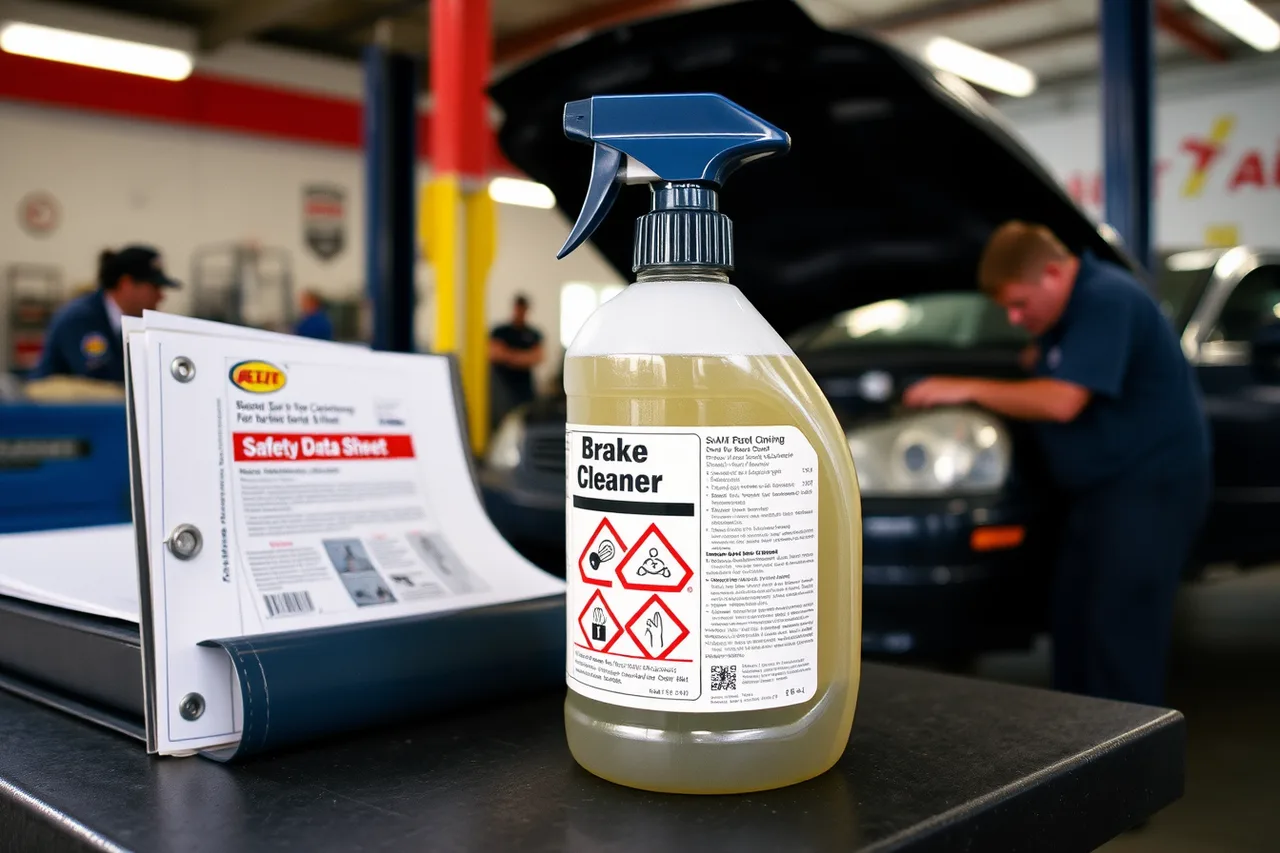
Secondary containers are the usual failure point. A spray bottle of brake cleaner poured from a bulk can needs a label with the product name and the hazards. A shop that leaves unlabelled squeeze bottles around the bench will get cited even if the SDS binder is perfect.
SDS binders can be paper or electronic, but every employee must be able to get to a sheet during their shift without asking permission. If you keep sheets on a shop computer, make sure the terminal is reachable from the bay and that someone can log in.
Training is required at hire and whenever a new hazard enters the shop. Keep a sign-in sheet with the date, the topics covered and the trainer's name. That sheet is the first thing an inspector asks for after the SDS binder.
Lift, ventilation and lockout/tagout rules for shop equipment servicing
Vehicle lifts, tire changers, compressors and paint booth fans all have energy sources that can hurt someone during service. OSHA’s control of hazardous energy standard, 29 CFR 1910.147, requires written energy-control procedures for applicable equipment, training for authorized employees, and locks and tags that identify who is working on the equipment.
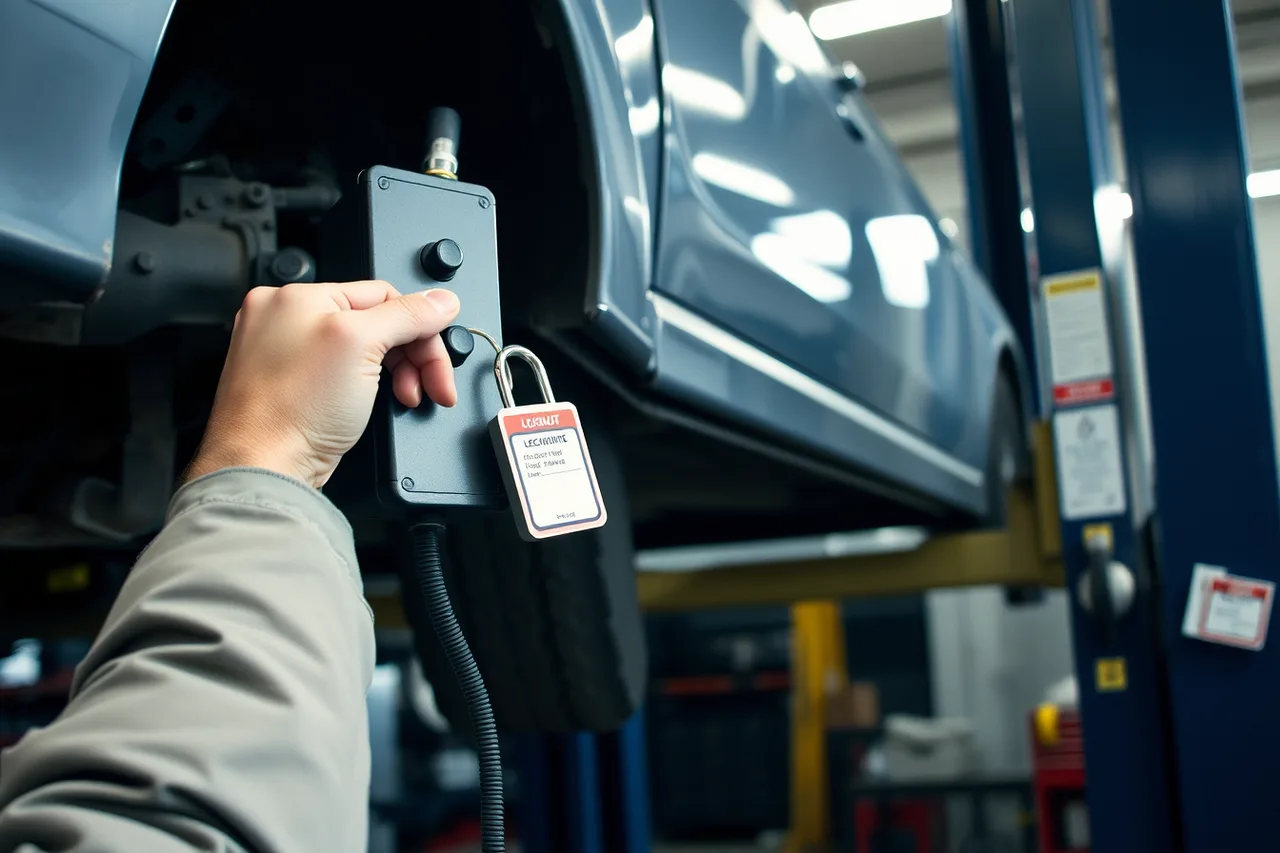
In practice, that means a technician servicing a lift disconnects the power, applies a personal lock and tag, and verifies the equipment will not start. Only that technician removes the lock. A shop with no written procedure and no locks is exposed even if nobody has been hurt.
Ventilation is the other half. Running a car indoors produces carbon monoxide, and paint work produces solvent vapor. Exhaust hoses, bay doors and booth filters need to be checked on a schedule. If you cannot document airflow, assume the inspection will not go your way.
Equipment service also interrupts the way work flows through the shop. Schedule lift maintenance and booth filter changes during slow hours so a locked-out lift does not strand a job on the rack.
Respirator programs for paint and body work, and PPE for technicians
Painters and body technicians face isocyanate exposure, which is a serious respiratory hazard. OSHA’s Respiratory Protection standard, 29 CFR 1910.134, requires a written program, medical evaluation, fit testing, training and cartridge change schedules for anyone required to wear a respirator.

A written program is not optional even for a small booth. It must name a program administrator, describe how respirators are selected and stored, and explain how you handle a worker who cannot wear one. Fit testing is annual for tight-fitting respirators, and medical evaluation comes before the first fit test.
PPE beyond respirators is straightforward. Safety glasses or goggles for grinding and battery work, gloves matched to the chemical, hearing protection near air tools, and steel-toe boots where heavy parts move. Provide it, require it, and replace it when it wears out.
Training records and fit test records belong in the same file as the HazCom sheets. New hires in the body shop should not spray until the medical clearance and fit test are on file; record that clearance before assigning the first spray job.
Heat illness guidance for shops in Phoenix, Miami and other hot markets
Federal OSHA has no standalone heat illness standard for general industry, but the Occupational Safety and Health Act’s General Duty Clause, Section 5(a)(1), requires employers to address recognized serious hazards. Shops in Phoenix, Miami, Houston and similar markets should use OSHA heat illness guidance to plan water, rest, shade and acclimatization for new hires.
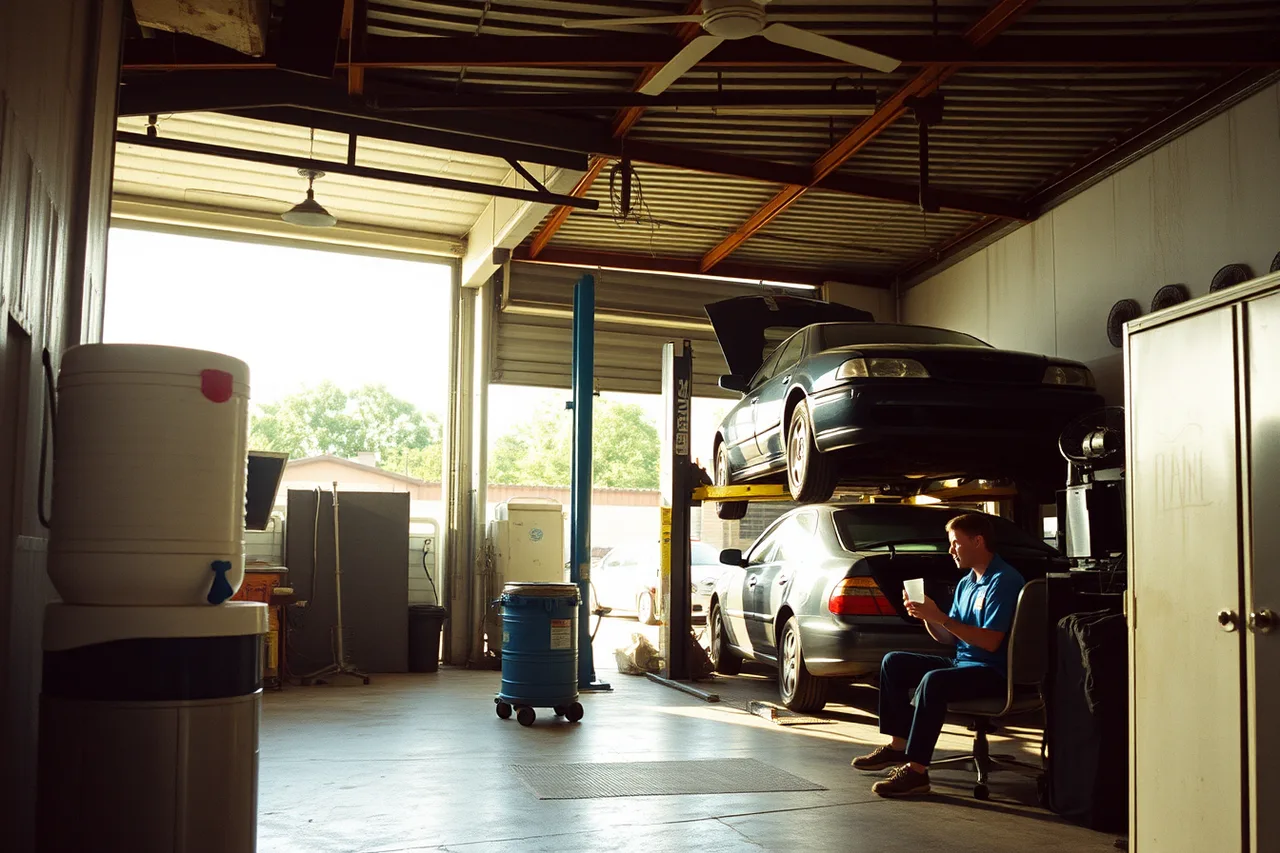
A bay can run hotter than the outdoor temperature, especially with a car idling and a metal roof overhead. Provide cool water within reach, schedule heavy jobs for early morning, and give new technicians a week to adapt before assigning them full days in the heat.
Train supervisors to spot the symptoms: heavy sweating, weakness, dizziness, headache, nausea and confusion. Confusion or fainting means call 911 and cool the worker immediately. A written heat plan with a named person responsible is the simplest defense.
California has specific heat illness rules: Cal/OSHA’s Title 8, Section 3395, covers outdoor places of employment, and Section 3396 covers indoor workplaces. Identify which standard applies to the work and follow it; other states may also have their own heat rules. The same principle applies to licensing and the rules that follow your shop from state to state.
The compliance records an inspector will ask for, and how long to keep them
Keep a compliance file organized by rule and waste stream. Include hazardous-waste determinations, signed manifests and return copies, and applicable biennial or exception reports and waste analyses; OSHA HazCom programs, chemical inventories, SDS access and training records; LOTO procedures, inspection certifications and training records; respirator-program, medical-evaluation and fit-test records; and heat plans and training records. For each repair order, record any job-specific hazard control, who completed it and where its supporting compliance record is filed.
Compliance Records Inspectors Ask For
- Hazardous waste manifests and return copies3 years
- Used oil and solvent accumulation logs3 years
- SDS binder and chemical inventorycurrent, 30 years exposure
- HazCom training sign-in sheets3 years
- Lockout/tagout procedures and training3 years
- Respirator fit tests and medical clearancesemployment plus 30 years
- Heat illness training and plan3 years
For LQGs, EPA’s manifest and record guidance identifies EPA Form 8700-22 for off-site shipments and says to retain signed manifests, biennial and exception reports, waste-determination documentation and waste analyses at the facility for at least three years. OSHA does not set one general retention period for every HazCom, LOTO and training record; keep current program documents and any records required by the applicable standard. Keep respirator fit-test records until the next fit test. When records are covered by 29 CFR 1910.1020, retain exposure records for 30 years and employee medical records for the duration of employment plus 30 years.
A quarterly self-audit catches most problems before an inspector does. Walk the waste area, open the SDS binder, check the training log and confirm the lockout locks are still in the cabinet. Fix what you find, and write down that you fixed it.