Guides
Miami Auto Repair Storm Damage Records
Miami auto repair storm damage records: salt and flood inspections, photo sets, Florida written estimates, work-order fields and shop-loss files.
What to take away
- Miami auto repair storm damage can arrive as salt-related undercarriage corrosion between storms and flood-damaged vehicles after severe weather.
- Undercarriage and salt exposure checks are straightforward to document with photos.
- Flood vehicle inspection should cover fluids, electronics, brakes and submerged connectors before an estimate is written.
- For insurance discussions, provide a written estimate, separate storm damage from pre-existing wear, and follow the carrier's requested submission process.
- Keep shop-property and business-interruption records separate from customer-vehicle files; verify any SBA or FEMA assistance directly rather than promising eligibility.
- Discuss possible total-loss outcomes with the insurer before teardown; do not promise a universal threshold or title result.
What Miami auto repair storm damage looks like after hurricane season
Miami sits between Biscayne Bay and the Atlantic, so salt exposure is part of the coastal setting, not just a storm concern. It can accelerate corrosion on brake lines, subframes, control arms and exhaust hangers.
NOAA storm-surge products can inform staffing and intake planning, but they do not estimate how many flood-damaged vehicles a shop will receive. The most useful one for a Miami service desk is the National Hurricane Center's Storm Surge Watch and Warning Graphic. A storm surge warning means there is a danger of life-threatening inundation somewhere within the specified area, generally within 36 hours; a watch means inundation is possible, generally within 48 hours. Log the date and time a warning covers Miami-Dade in the shop's storm file, because it marks when flood intake is likely to start.
After a storm affects South Florida, cars may arrive with water lines on the door panels, musty carpets and electrical faults that emerge later. Storm surge can bring brackish water to the underbody, wheel wells and sometimes the cabin.
Intake can bunch after severe weather, leaving a queue of flooded vehicles that strains ordinary scheduling. Booking that surge without gaps or overruns helps the shop manage the work without turning the schedule chaotic.
Not every car that arrives is a flood car. Some customers simply want a post-storm once-over, and that is a legitimate, billable inspection. Treat it as a paid service, not a free courtesy.
Undercarriage rust and salt exposure: the inspections that find it
Undercarriage rust repair in Florida starts with a lift and a light. Surface rust on cast iron is normal. Scaling rust that flakes off a structural member is not, and it needs to be written up as a safety item.
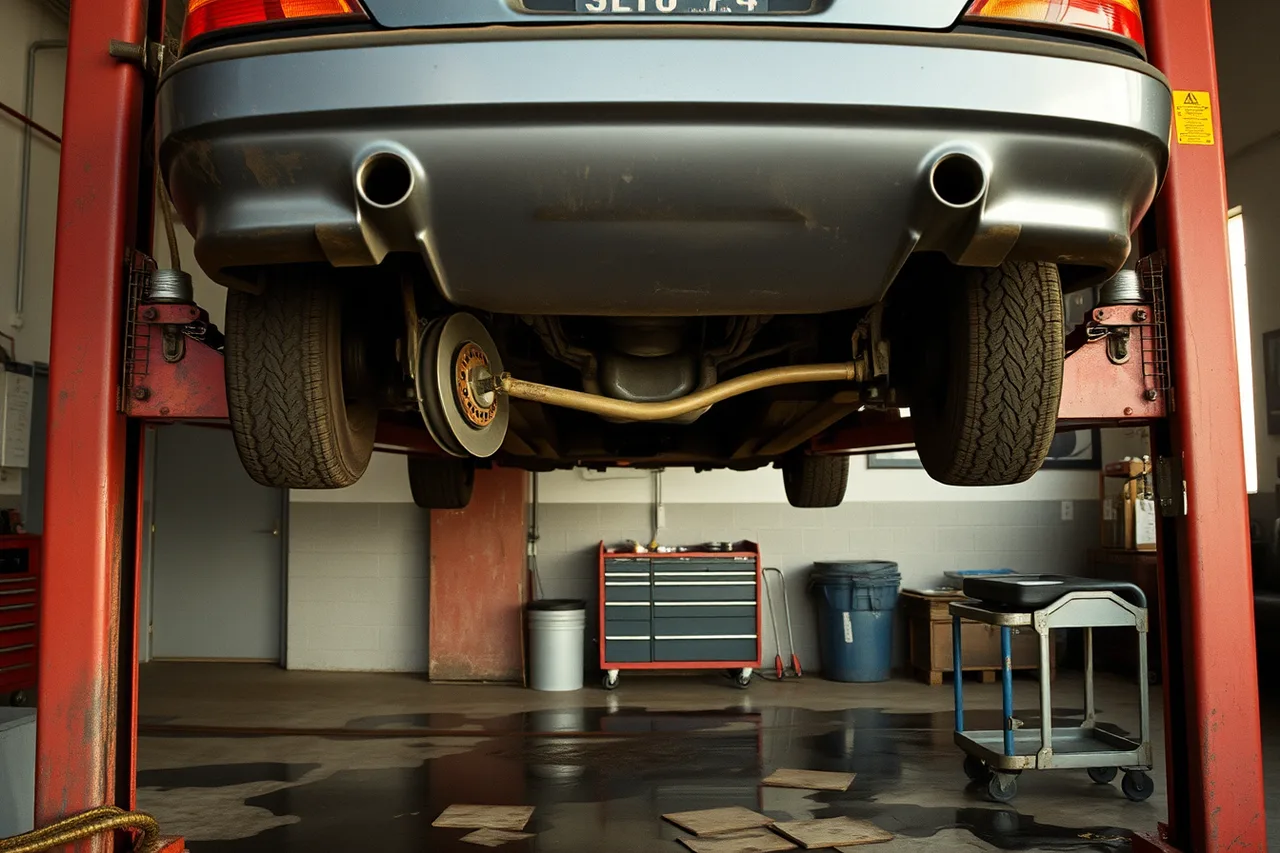
The salt exposure checks that matter most:
- Brake lines and fuel lines, looking for pitting, weeping fittings and rust under the plastic clips
- Subframe and cradle mounting points, especially where road spray collects
- Control arms, tie rod ends and ball joints for play and corrosion
- Exhaust hangers, heat shields and catalytic converter flanges
- Wheel wells and rocker panels for bubbling paint and trapped sand
- Battery tray, terminals and ground straps
- Anywhere a previous repair left bare metal uncoated
Photograph each finding before and after cleaning. A photo of a brake line that crumbles under a wire brush is worth more than a paragraph of description when the customer questions the price.
Salt damage car repair is not always a big ticket. Sometimes it is a brake line replacement and a rust converter application. Sometimes it is a subframe. Quote small jobs clearly, explain larger repairs before authorization, and document why the work is needed.
Flood damage checks: fluids, electronics, brakes and submerged connectors
Flood damage vehicle inspection is a different discipline from rust work. Water that reaches the carpet may also reach electrical components, and faults can emerge later.
Start with the fluids. Engine oil, transmission fluid and differential oil that look milky or overfull mean water intrusion. Pull the dipstick and smell it. Check the brake fluid reservoir for contamination and the power steering reservoir on older cars.
Then the electronics. Submerged connectors corrode from the inside. Look under the seats, behind the kick panels, in the trunk well and at every ground point you can reach. A car that starts fine can later throw codes as moisture and corrosion affect wet terminals.
Brakes deserve their own pass. Water in the brake system, rusted calipers and seized parking brake cables are common after a flood. Pull the drums and inspect the shoes rather than trusting a road test.
If a repaired flood vehicle later shows a safety defect, the NHTSA process for reporting vehicle safety problems is the correct channel, and customers should be told that. Document your own findings in the work order regardless, because a flood car can change condition between visits.
Interior work is unavoidable on deep intrusions. Carpet, padding and seat foam can retain moisture and support mold growth in South Florida's heat. Drying and disinfecting is legitimate billable labor, and it should be itemized separately from mechanical repair.
Insurance paperwork, estimates and photo documentation Miami shops handle
Hurricane insurance claim auto repair is an administrative job as much as a mechanical one. Insurers may request a written estimate, photos, and a clear separation between storm damage and pre-existing wear.
Florida law already fixes the estimate itself. Under section 559.905 of the Florida Statutes, when repair work will cost the customer more than $150, the shop must prepare a written repair estimate, including diagnostic work, before effecting any diagnostic work or repair. The estimate must carry the date and time, and the vehicle's year, make, model, odometer reading and license tag number. A copy of the estimate and the disclosure statement goes to the customer before repair work begins. A car left while the shop is closed, or delivered by someone else, which is common after a storm, counts as an implied partial waiver; the shop must still notify the customer once the diagnostic work needed for the estimate is done.
That last point about pre-existing wear causes disputes. A rusted brake line is not automatically storm damage, and an adjuster may question whether it is related to the storm. Inspection photos help show what the shop observed and when.
A workable photo set for each claim:
- Wide shot of the vehicle with the license plate or VIN visible.
- Water line or debris line on the body, interior and engine bay.
- Close-ups of every affected component before cleaning.
- The same components after cleaning, so the damage is unambiguous.
- Odometer and dashboard with any warning lights lit.
- The written estimate, signed and dated.
Keep a copy of everything in the customer file. An organized packet can be resent if requested, and it gives the shop a clear record of the inspection, estimate and supporting photos.
Use these fields in the customer work order so the inspection can be reviewed without relying on the photo folder alone:
- Vehicle identifier (VIN or plate), odometer, intake date, reported water exposure, and observed water or debris line
- Each inspected component or system, its observed condition, the related photo, and whether the finding is confirmed or needs diagnosis
- Separate storm-related observations from pre-existing wear; record fluid, electronics, brake, connector, and interior findings as applicable
- Estimate items, customer authorization, insurer submission, and the decision or status before teardown
A storm-damage work order can carry those fields as one block at the top of the record:
- Storm reference:storm name and the date the surge warning covered Miami-Dade.
- Vehicle:VIN, plate, odometer, intake date and time.
- Exposure:customer's account of where the car was parked and how deep the water reached; observed water or debris line, with photo numbers.
- Findings:one line per system (fluids, electronics, brakes, connectors, interior, undercarriage), each marked storm-related, pre-existing or needs diagnosis.
- Estimate:items, labor and parts, with drying and disinfecting itemized separately.
- Insurer:carrier, claim number, adjuster, date the packet was sent.
- Authorization:customer signature and date, and the insurer's decision before teardown.
- Title note:whether the carrier has said the vehicle is repairable or a total loss.
Your own business coverage matters here too. Storm damage to the building, lifts or diagnostic equipment may be handled separately from a claim involving a customer's vehicle, so review the policy exclusions before a storm.
The same logic that governs insurance for an auto repair shop applies to storm claims: check what is excluded, then document accordingly.
Estimators should also agree internally on how findings are written, so two advisors describe the same rust the same way. That consistency is part of how owners verify service standards across the counter.
Recording shop-side storm losses and assistance inquiries
A storm that floods customer cars can also damage the shop. Record building, equipment and business-interruption losses separately from customer-vehicle repair orders. Keeping those files distinct makes the shop's losses easier to explain to an insurer or assistance office.
For assistance inquiries, do not present SBA disaster assistance as a guaranteed loan or assume lost revenue is covered. Check current program eligibility and terms before advising an owner. Two SBA programs are the ones a shop owner will hear about. Business physical disaster loans apply when business property, real estate, inventories, supplies, machinery and equipment have been damaged in a declared disaster area, which covers flooded lifts and diagnostic gear. Economic Injury Disaster Loans (EIDL) are working capital loans for small businesses that cannot meet ordinary and necessary financial obligations as a direct result of the disaster; the SBA states that loss of expected profits or a decline in sales is not considered substantial economic injury. Both depend on a declared disaster area, so record the declaration for the storm in the shop-loss file. The SBA disaster loan page gives the ceiling: physical disaster loans of up to $2 million to qualified businesses for disaster losses not fully covered by insurance. A business may qualify for both an EIDL and a physical disaster loan, and the maximum combined loan amount is $2 million.
Do not promise that FEMA assistance covers a business's losses or expenses. Check current FEMA and SBA guidance for the event and the business before describing available help.
Customers may ask about household assistance too. Keep current official resources available, but direct customers to the relevant agency to confirm eligibility and application details.
Document shop losses with dated photos, receipts, and a written record of interrupted work. Use the same documented-cost discipline behind real startup costs planning, so a reviewer can distinguish recorded losses from estimates made from memory.
Discussing repair limits before teardown
Florida Statutes § 319.30 addresses motor-vehicle total-loss and title handling. Do not give a carrier-independent percentage from memory; ask the insurer to explain its determination and the required title steps before teardown.
What you can do is give the customer a realistic repair figure early. If the estimate is approaching the insurer's likely repair limit, say so before teardown rather than after. A customer who understands the issue in advance is better prepared for the carrier's decision.
Claim-file example. A customer brings in a vehicle with water at the door sills. The shop documents a wet body control module, contaminated transmission fluid, corroded brake components and soaked carpet, then separates confirmed findings from items that still need diagnosis. The advisor sends the estimate and photos to the insurer, explains that the carrier determines settlement and title handling, and gets written authorization before teardown. The file records what was observed, what was approved and what remains uncertain.
Before repair, explain that title branding depends on the vehicle's official disposition and applicable Florida process, administered by the Florida Department of Highway Safety and Motor Vehicles (FLHSMV). Ask the carrier which title it will apply for and note the answer in the work order. Check the title status rather than promising that every flood-damaged vehicle will receive a branded title. Discuss documented damage, resale considerations and possible future electrical issues in writing.
Finally, do not promise an outcome you do not control. You control the inspection, the documentation and the estimate. The carrier controls the settlement, and saying so plainly builds more trust than optimism.