Guides
Auto repair shop equipment: specs, setup, and upkeep
Plan auto repair shop equipment around bay capacity, installation needs, safety, maintenance, and replacement decisions—not brand hype.
What to take away
- Plan auto repair shop equipment around capability, not brands. A general-repair shop needs a two-post lift rated near 10,000 lb, a four-post or alignment rack, a tire changer and balancer, a bidirectional scan tool with J2534 pass-through, a DMM and scope, and an SAE J2788 A/C station.
- Budget in bands. A first general-repair bay typically lands between $45,000 and $90,000 in fixed equipment and hand tools. Collect three current, itemized quotes.
- Paid motor vehicle A/C service requires Section 609 certification and approved refrigerant handling equipment.
- High-voltage and ADAS work needs trained staff, an isolated area, and paid manufacturer information access before you buy tooling.
- Replace an asset when yearly repair spend plus downtime cost tops the annualized cost of its replacement.
The equipment list, with specs and budget bands
Match each item to the vehicles you actually accept. A shop that turns away one-ton trucks does not need a 14,000 lb rack.
| Item | Spec to match | Typical planning range |
|---|---|---|
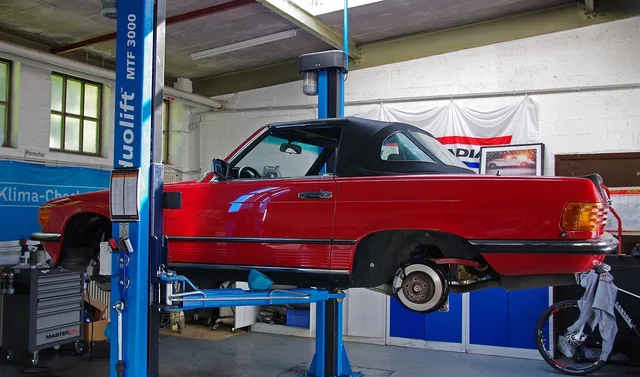
| Two-post lift | 10,000 lb capacity, 12 ft clear height | $4,000 to $9,000 |
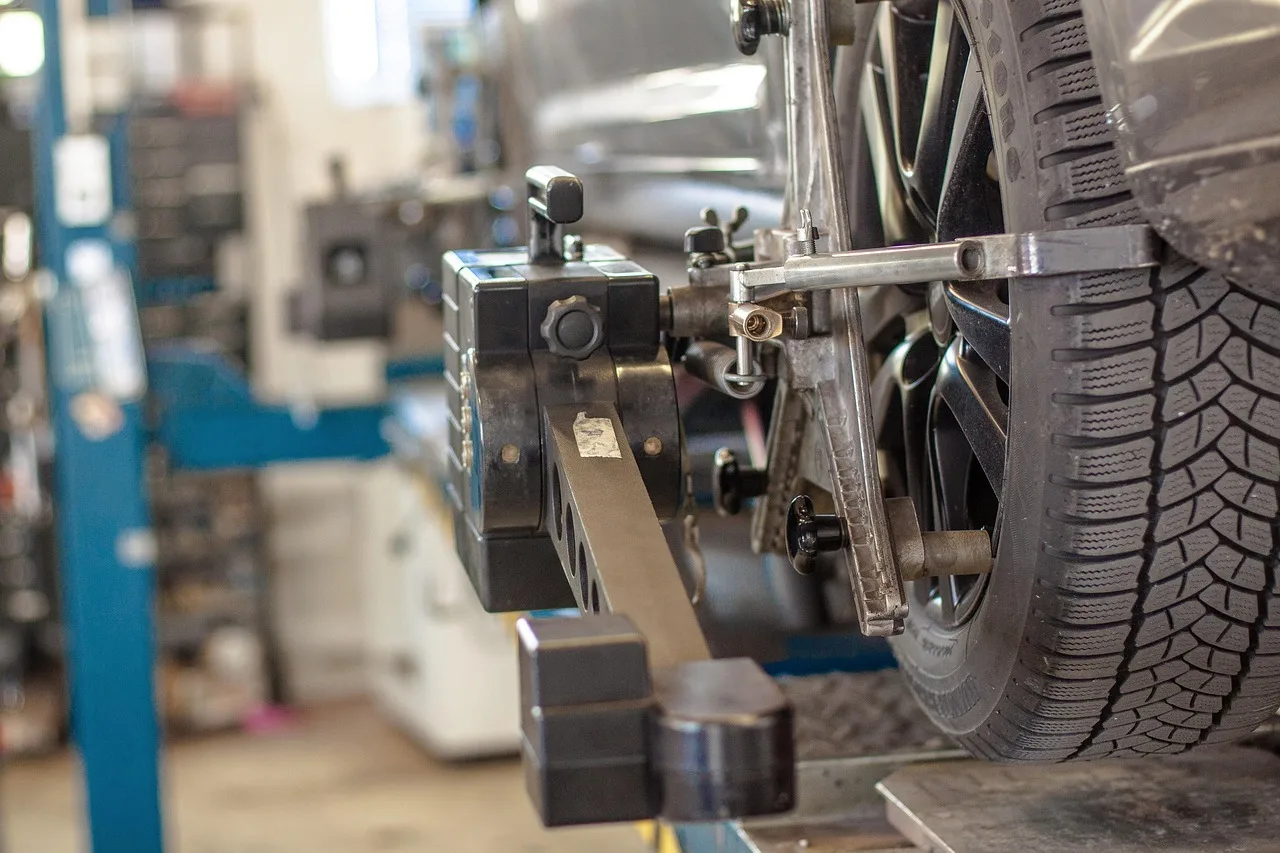
| Four-post or alignment rack | 12,000 to 14,000 lb, wheelbase coverage | $12,000 to $35,000 |
| Tire changer and balancer | Wheel diameter to 24 in, run-flat and TPMS support | $6,000 to $18,000 |
| Scan tool and software | Bidirectional control, J2534 pass-through, subscriptions | $2,000 to $8,000 a year |
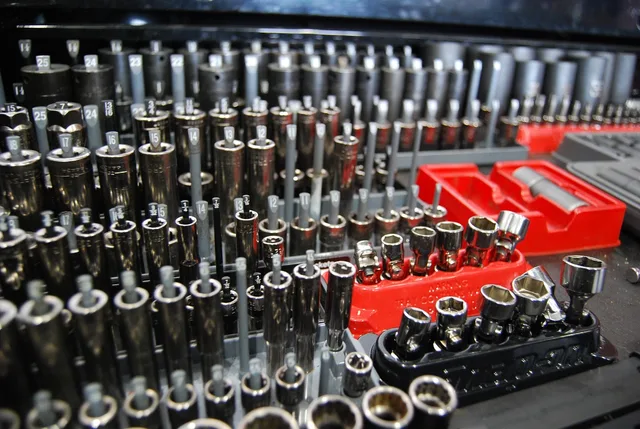
| DMM, scope, torque tools | True RMS, calibrated range to 250 ft-lb | $1,500 to $5,000 |
| A/C station | SAE J2788 compliant, refrigerant identifier | $4,000 to $9,000 |
Treat these bands as rough planning estimates, not quotes. Freight, installation, anchoring, and electrical work commonly add 15 to 30 percent; ask US distributors for dated, itemized quotes.
For a first bay, anchor the lift before tooling that depends on it arrives. The equipment checklist for new owners is a separate reference.
Setting up a bay: the steps that fail first
- Measure clear height and slab. A two-post lift typically needs 12 ft of headroom and a 4 to 6 in reinforced slab.
- Confirm the electrical service. A bay with a lift, an A/C station, and a welder usually needs a dedicated 100 A subpanel.
- Run air, oil, and drain drops clear of the lift travel path.
- Plan refrigerant storage and ventilation before the A/C station is delivered.
- Write the lift inspection schedule before the first vehicle goes up.
Those five checks sink more installs than tool choice does.
A pulled anchor or a crushed drop line is a safety event, not an inconvenience. OSHA's Recommended Practices for Safety and Health Programs emphasizes planning hazard controls into the worksite rather than adding them after an injury.
Rules that change what you may buy
Anyone paid to service motor vehicle air conditioning must be certified under Section 609 and must use approved recovery and recycling equipment. The EPA MVAC technician and shop owner resources state the certification and equipment expectations directly.
High-voltage work is a competence decision before it is a tooling decision. You need isolated space, insulated tools, PPE, and paid manufacturer service information before an EV job enters the schedule; see this shop workflow guide.
Before offering work, confirm the shop licensing requirements in your state and any ADAS calibration documentation requirements that apply.
Four points anchor the purchase: worker competence, safety, maintenance, and workspace fit.
Evidence points for equipment guide
- OSHAproactive safety and health program
- EPASection 609 training and certification
- EPAapproved refrigerant-handling equipment
- BLStechnician work, training, pay data
Maintenance and calibration intervals
These are typical manufacturer intervals. Your own manual overrides them.
- Torque wrenchesverify yearly or after 5,000 cycles, whichever comes first.
- Liftsinspect on the manufacturer schedule, and after any anchor or structural work.
- A/C stationschange filters, verify leak detection, and check scale accuracy each season.
- Alignment rackscalibrate at the maker's interval, and after any move.
- Scan toolsrenew subscriptions before a coverage gap lands on a job.
Technician pay decides what a saved hour is worth. The Bureau of Labor Statistics' Occupational Employment and Wage Statistics program publishes wage data for automotive service technicians. Compare local pay with the value of a blocked bay before justifying a tool on labor savings.
Used lifts and reconditioned A/C stations can cut entry costs, but compare warranty exposure and resale value with the purchase savings.
Repair or replace: the numbers that decide
Track three numbers per asset: yearly repair spend, downtime hours, and the loaded value of a blocked bay.
Example: a lift with $3,000 a year in repairs and steady downtime costs more over five years than a $12,000 replacement.
Repair stays sensible while parts arrive in days and downtime fits inside a shift. Age alone is a poor trigger.
Parts availability decides as many calls as cost. A discontinued sensor on an older alignment rack can idle a bay for a week while a replacement is quoted.
Warranty terms shift the maths too. New units broadly carry longer parts coverage than rebuilt ones, so weigh the covered years against the repair history.
Downtime only becomes visible if someone records it. Record asset cost and downtime in the shop system; related shop software and KPI information offers broader operations context.