Guides
Auto repair shop equipment: the case for used, the case for new
Weighing new and used auto repair shop equipment comes down to bay hours, financing cost and who can service the machine after the warranty ends.
What to take away
- For most auto repair shop equipment, a new two-post lift from Rotary, BendPak or Challenger lists for close to what a used unit costs once freight, anchoring and inspection are added. Compare installed price, not sticker price.
- Used scan tools and ADAS calibration rigs carry subscription and software fees that often decide the purchase.
- Buy the machine only when the bay hours to pay for it already exist on the schedule.
- Confirm electrical, ceiling height and anchoring before you sign, because the building decides what fits.
- Keep every quote, service record and warranty document; they set resale value and settle disputes.
This article covers business and operating decisions, not vehicle repair, electrical, safety, tax or legal advice. Shop licensing, repair authorization, refrigerant handling, inspections and technician credentials vary by jurisdiction. Confirm current requirements with your state DMV, your state environmental agency or a licensed attorney before acting.
The two-post lift is the first real decision
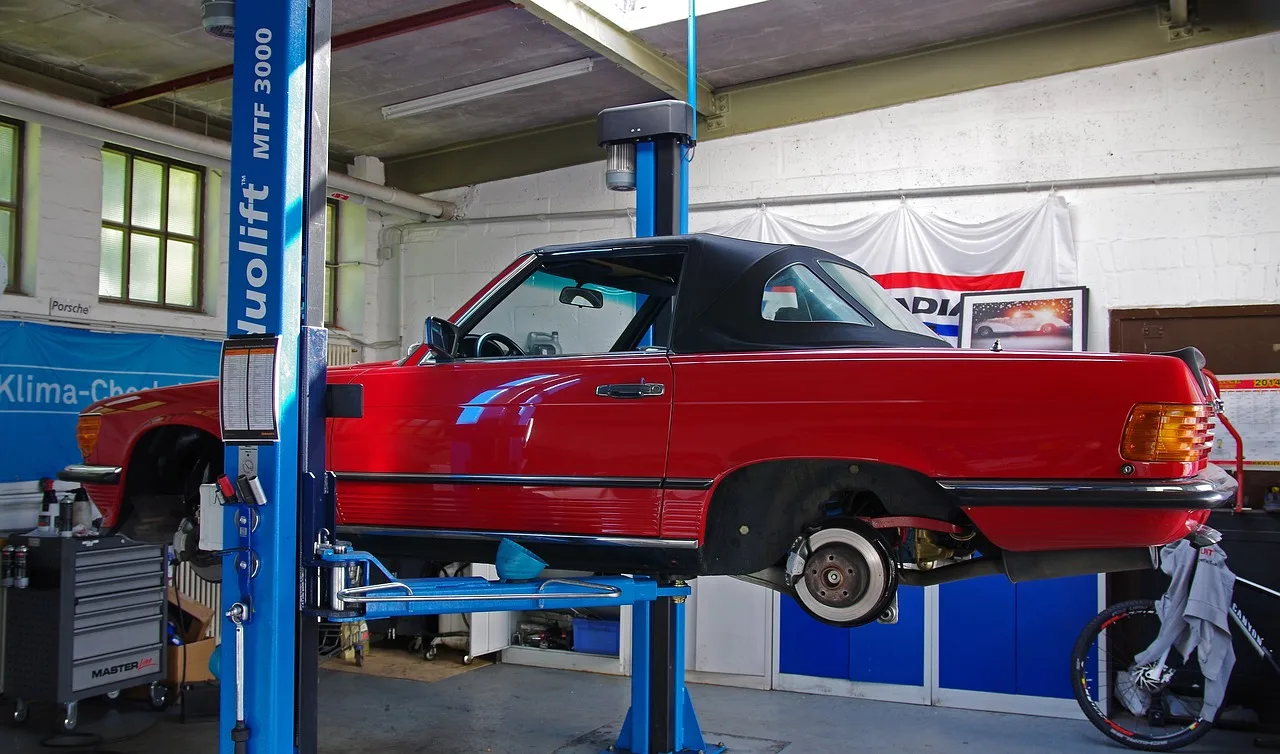
Almost every new-versus-used argument in a shop starts at the lift. A 10,000 lb asymmetric two-post is the standard bay workhorse, and the names most often quoted are Rotary, BendPak and Challenger.
A two-post asymmetric lift from a known maker runs in the low-to-mid five figures installed. Base-unit list prices usually sit between about $3,000 and $8,000, before freight, anchors and inspection.
Rotary (Madison, Indiana) builds the SPOA10. BendPak (Santa Paula, California) builds the XPR-10AS. Challenger Lifts (Louisville, Kentucky) builds the LE10. All three rate their flagship asymmetric models at 10,000 lb.
A used unit from a closing shop often lists at half that. That price comes before freight, anchoring and a fresh inspection.
The used lift is not automatically cheaper. A certified installer has to verify the concrete slab, the anchor torque and the overhead clearance, and that work costs the same whether the steel is new or ten years old.
Check the ALI (Automotive Lift Institute) certification plate on any used lift before money changes hands. ALI, based in Cortland, New York, runs the third-party certification program that insurers and inspectors look for. A lift without a current plate is a liability question for your insurer, not a bargain.
Scan tools and ADAS calibration rigs
Diagnostic capability is where the used market gets complicated. A used Autel MaxiSys or Launch X431 can be a sound buy, but the software subscription, the vehicle coverage and the update history travel with the account, not the hardware.
Autel (Shenzhen, China) sells the MaxiSys line, with the MaxiSys Ultra at the top. Launch Tech makes the X431 series, including the X431 PAD VII. Snap-on (Kenosha, Wisconsin) sells the Zeus and Apollo platforms, and it also gates updates behind a paid subscription.
Update subscriptions typically run from a few hundred dollars a year on budget tools to well over a thousand on OEM-linked platforms.
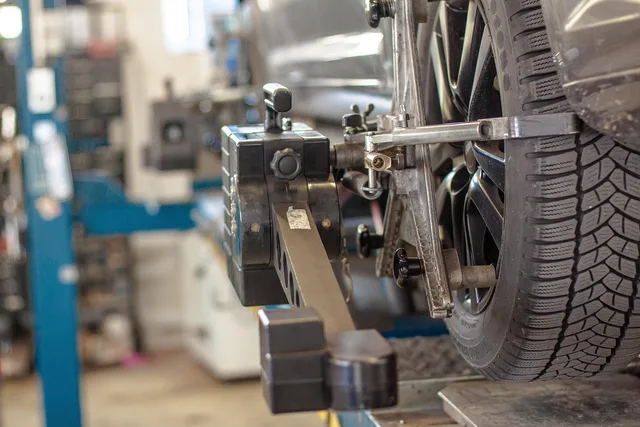
An ADAS calibration setup is the bigger commitment. Autel, Hunter and Texa all sell calibration systems, and the space, the target boards and the level floor matter as much as the brand.
Hunter Engineering (St. Louis, Missouri) builds the alignment and calibration gear many shops already own. Texa (Padova, Italy) sells the RCCS rig. Hella Gutmann (Germany) and Autel also sell calibration systems.
A used rig without a current software license may not cover the 2024-and-later vehicles you actually see.
For OEM-level diagnostics, factor in a subscription to a service such as Identifix or ALLDATA. ALLDATA is owned by AutoZone, and Identifix is part of Solera. That recurring cost applies whether the tool on the bench is new or secondhand.
The arithmetic that decides it
Do not compare purchase prices. Compare cost per bay hour over the years you expect to own the machine.
Let P be the installed purchase price, R the annual repair and calibration cost, S the resale value when you sell, and N the years you keep it. The annual cost is (P + R x N - S) / N. Run that for the new unit and the used unit side by side.
Then divide by the billable hours that machine will actually produce. If the lift adds two billable hours a day at your effective labor rate, you can see how many months it takes to clear the cost. If it adds none, the answer is already settled.
A quick illustration shows how close the two can land. A new unit at $8,000 installed with $200 a year in service and $1,500 resale over 10 years costs about $850 a year.
A used unit at $5,000 all-in with $400 a year in service and $800 resale costs about $820 a year. The used saving is almost gone.
What to check before you buy either
- Concrete slab thickness and compressive strength meet the lift maker's spec (most 10,000 lb two-posts ask for at least 4 inches of 3,000 psi concrete)
- Ceiling height clears the lift plus the tallest vehicle you service (a 10,000 lb two-post usually needs about 12 feet)
- Electrical service and breaker capacity match the machine (most run on 208 to 230 volt single phase)
- ALI certification plate is current on any used lift
- Software and subscription transfer is in writing for scan and calibration tools
- Insurance covers the installed equipment and the work it enables
- A named technician is trained and responsible for the machine
Where used equipment wins and where it does not
Used makes sense when
- Rotary SPOA10 or BendPak XPR-10AS two-post lift
- A certified unit with a current ALI plate is available locally
- Hunter Road Force Elite or Coats balancer
- Volume is steady and the model is still supported
- Autel MaxiSys or Launch X431 scan tool
- The subscription transfers and coverage meets your fleet
- Hunter or Texa ADAS calibration rig
- Rarely, unless the software license is current
- Ingersoll Rand or Quincy air compressor
- The tank and motor pass inspection
- Ranger R980AT or Coats tire changer
- Parts and service are still available
- Hunter Hawkeye Elite alignment system
- The camera set is complete and recently calibrated
Buy new when
- Rotary SPOA10 or BendPak XPR-10AS two-post lift
- You need a specific capacity or configuration
- Hunter Road Force Elite or Coats balancer
- Road-force balancing is a selling point
- Autel MaxiSys or Launch X431 scan tool
- You need current OEM coverage
- Hunter or Texa ADAS calibration rig
- You are taking on calibration work
- Ingersoll Rand or Quincy air compressor
- Duty cycle and noise matter in your bay
- Ranger R980AT or Coats tire changer
- You want a modern rim-clamp machine
- Hunter Hawkeye Elite alignment system
- You sell alignments and need current specs
Common questions
Is a used two-post lift worth the saving?
Sometimes, if the ALI certification plate is current and a certified installer confirms your slab and anchoring. The saving disappears when you add freight, installation and any repair the lift needs. A Rotary SPOA10 or BendPak XPR-10AS holds resale value, so used prices often sit close to new.
Do used scan tools still get software updates?
Only if the subscription transfers with the tool, which is not automatic. Autel, Launch and Snap-on all gate updates behind paid subscriptions. Confirm coverage for the model years you service before you pay.
How do I know the shop can support the equipment?
Check electrical service, floor and ceiling clearance, and whether a trained technician is available to run it. Equipment and setup covers the building side of that question.
What records should I keep?
Keep every quote, service record, warranty document and software license. They set resale value and settle disputes, and they are the first thing an insurer asks for after a claim.
For refrigerant-handling equipment, the EPA technician and shop owner resources list the certification and approved equipment requirements. For workplace safety around lifts and compressed air, OSHA safety management is the starting point. Technician pay and certification context sits in the BLS occupational outlook, and the new-owner equipment checklist covers what a first shop needs before it buys anything.