Guides
Auto repair shop equipment: what to buy first
Owners researching 'auto repair shop equipment checklist' need more than a generic checklist. They need to separate repair and safety goals from operating.
What to take away
- Buy a lift first. Nothing earns money until a vehicle is off the ground.
- Compressed air comes second. Lifts, impact tools and most bay work depend on it.
- Diagnostics come thirda scan tool with secure gateway access, a multimeter and torque wrenches.
- Plan $45,000 to $75,000 for a two-bay startup that mixes used and new. An all-new kit runs $110,000 and up. These are typical ranges, not quotes.
- Safety gear and refrigerant certification are preconditions, not purchases to postpone.
A new shop should buy in this order: lift, air, diagnostics, hand tools, safety. That opens two bays for brakes, suspension, batteries, charging, check-engine work and oil service. Expensive capability purchases wait.
The buy-first sequence, step by step
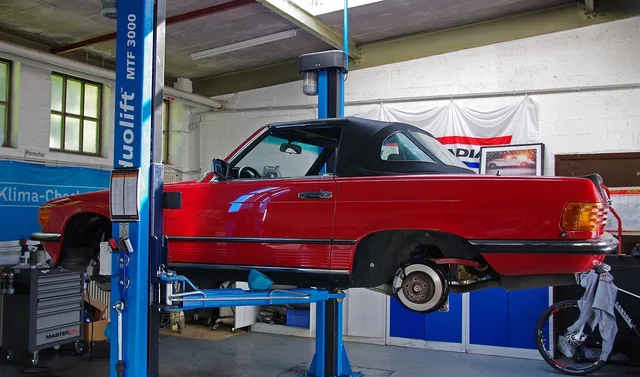
- One listed two-post lift, installed.Check the slab thickness and anchor spec the maker requires, ceiling height, and whether symmetric or asymmetric arms fit your bay depth.
- Compressed air sized to your tools.Include a dryer, a tank with reserve, and a drop at each bay. Water in the lines ruins impact wrenches.
- A scan tool with secure gateway accessfor the makes you see. Ask the annual subscription cost before buying hardware.
- Meters and torque tools.A digital multimeter, a current clamp and torque wrenches cover most electrical and assembly work.
- Safety and compliance gear.Extinguishers, eyewash, spill kit, ventilation, eye and hand protection, and approved refrigerant equipment if you touch A/C.
Auto Repair Shop Equipment Checklist
- Vehicle liftscapacity, bay layout, inspection, locks
- Scan toolscoverage, gateway access, subscriptions, updates
- Digital multimeterscategory ratings, leads, calibration
- Oscilloscopesprobes, current clamps, training, references
- Battery testersbattery types, test methods, records
- Tire changerswheel range, run-flat, guarding, calibration
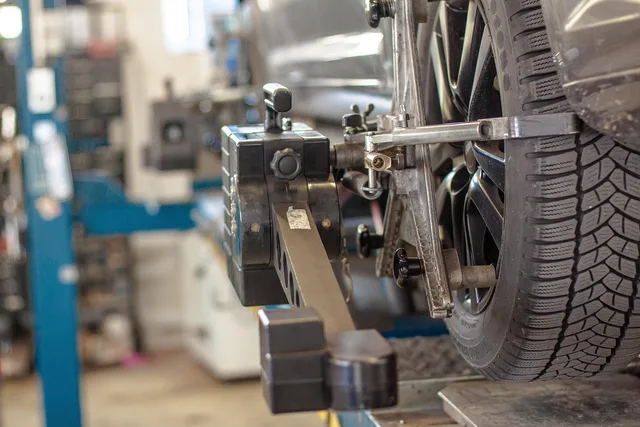
- Alignment systemrack compatibility, targets, bay length
Test each payment against expected gross profit per bay before you commit. Equipment debt that outruns labor margin closes shops faster than thin demand does. Auto repair shop margins, explained down to the break-even point shows how to build that test from your own numbers.
What the first year of equipment costs
First year of equipment costs
| Category | Typical range | When to buy |
|---|---|---|
| Two-post lift, one unit, installed | $4,000 to $12,000 | First |
| Air compressor, dryer, piping and drops | $3,000 to $9,000 | First |
| Scan tool plus first-year subscription | $2,500 to $9,000 | First |
| Hand tools, meters and torque wrenches | $3,000 to $10,000 | First |
| Safety, spill and PPE kit | $1,000 to $3,000 | First |
| Shop management software | $150 to $500 per month | Before the first invoice |
| Tire changer and balancer | $6,000 to $18,000 | Later |
| Alignment system | $15,000 to $45,000 | Later |
These are typical planning ranges. Get three written quotes above $5,000 and ask what freight, installation, adapters and training add to the invoice. Rigging and freight alone can move a lift quote by a noticeable margin.
Used equipment changes the first two rows. A reconditioned lift with a current inspection can cost half of new, while a tired balancer often costs more over five years than it saved. Auto repair shop equipment: the case for used, the case for new sorts the categories where each choice wins.
Example: a two-bay shop with a $60,000 budget
Illustrative allocation, built from the ranges above.
This shop sells brakes, suspension, batteries, charging, check-engine diagnostics and A/C recharge. Tire and alignment work wait until a full schedule can support a dedicated bay.
Safety and compliance items that come before the tools
OSHA expects hazards to be found and fixed before an injury or an inspection exposes them. That expectation applies to a two-bay startup exactly as it does to a chain. Occupational Safety and Health Administration: Safety Management lists the program elements.
Refrigerant work carries its own rule. Any technician paid to service motor-vehicle air conditioning must be certified and must use approved recovery equipment under Section 609. U.S. Environmental Protection Agency: Technician and Shop Owner Resources covers certification and equipment.
Pre-Action Evidence Checklist
- OSHAproactive safety and health program
- EPAcertified technicians for A/C service
- EPAapproved refrigerant-handling equipment
- EPAfollow Section 609 practices
- BLStraining, certification, licensing, pay data
State rules add equipment requirements of their own, from waste oil handling to inspection station gear. Auto repair shop licensing and the rules that follow it maps what changes when you cross a state line or add provincial inspection work.
Picking brands and models
Support decides more than the badge on the column. Ask who services the unit locally, how long parts take, and whether the maker trains your staff.
Where technician wages are high, equipment that removes an hour of labor pays back faster. The Bureau of Labor Statistics publishes wage tables by state, which lets you price a saved hour against the machine that saves it. Bureau of Labor Statistics: Automotive Service Technicians and Mechanics carries those tables.
Auto repair shop equipment, reviewed without the sales pitch works through lifts, scan tools and compressors category by category, including the questions that separate a workhorse from a showroom unit.