Guides
EV service equipment for auto repair shops: what to budget first
EV service equipment for auto repair shops runs about $18,000 to $95,000 in the first year. Here is what each line item costs and which ones can wait.
What to take away
- A basic EV-capable bay (lift pads, insulated tools, PPE, scan tool subscription) runs roughly $18,000 to $35,000. A DC fast charger pushes the same shop past $95,000.
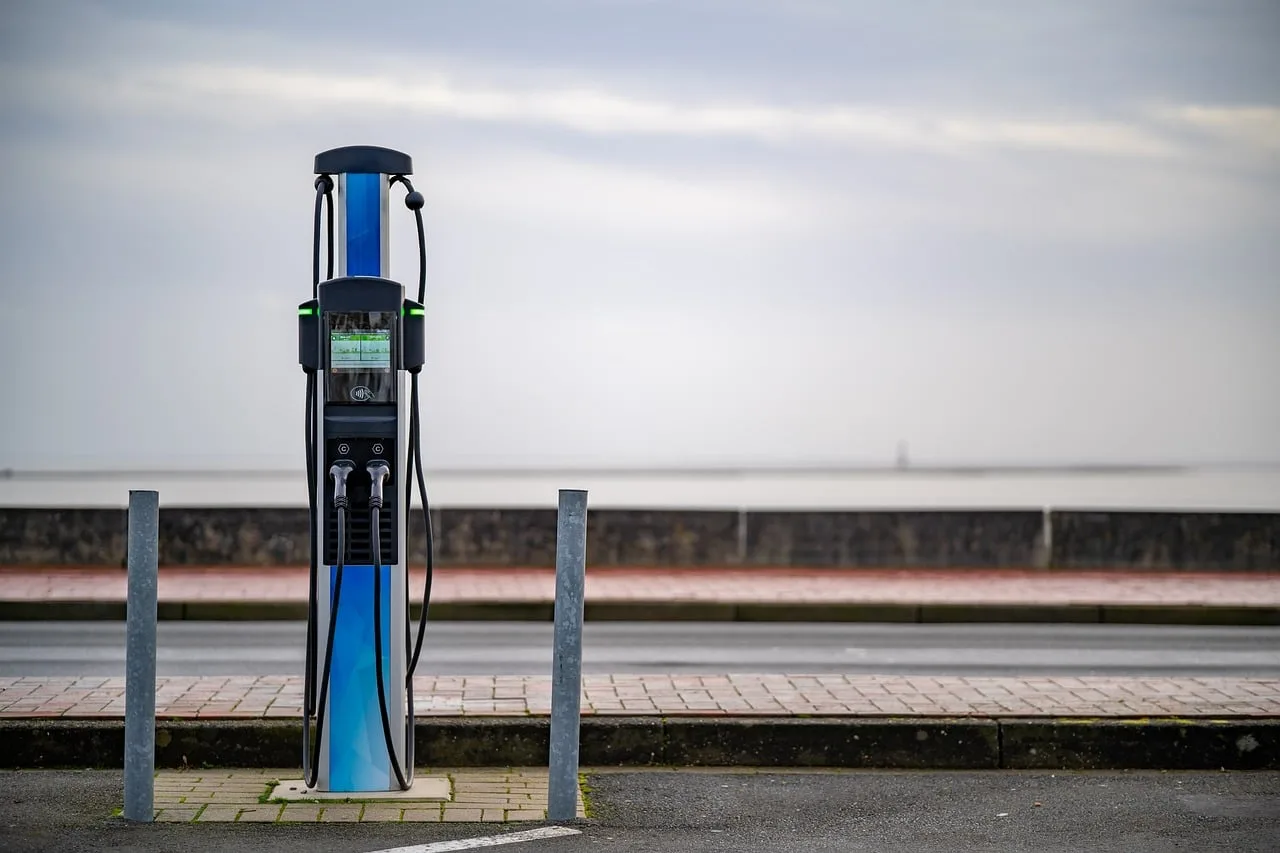
- Level 2 charging is the cheap part. The electrical service upgrade behind it is often the expensive part.
- The three biggest cost drivers are charger power level, distance from the panel to the bay, and whether your scan tool covers high-voltage diagnostics.
- State programs and utility rebates can cover a real share of charger hardware. Most exclude tools and training.
- Buy the diagnostic software before the charger. A shop that can read a battery module is billable sooner than a shop with a fast charger and no EV customers.
What the range covers
A shop adding EV work is buying four separate things: a place to park and lift the car safely, tools that will not kill the technician, software that can talk to the battery, and electricity delivered at a useful rate. Most published budgets mix these together and quote one number.
For a single-bay entry, plan $18,000 to $35,000. For a two-bay shop with a DC fast charger and a service upgrade, plan $70,000 to $95,000. Those are illustrative planning ranges, not quotes; your utility and your building decide the top end.
The Department of Energy's Alternative Fuels Data Center keeps the plain-language background on charging equipment if you need to explain the difference between AC Level 2 and DC fast charging to a partner. See electric vehicle basics.
Line by line
The table below is the invoice structure, not a wish list. One labelled column, so you can see where the money actually sits.
| Cost line | Typical range (USD) |
|---|---|
| Level 2 wall unit, 40 to 48 amp | $700 to $1,800 |
| DC fast charger, 50 kW class | $28,000 to $55,000 |
| Electrical service upgrade and panel work | $3,500 to $25,000 |
| Conduit, trenching and wiring to the bay | $1,200 to $9,000 |
| Lift pads, jack stands, EV-rated lift arms | $900 to $4,000 |
| Insulated hand tools and meter (CAT III/IV) | $1,500 to $3,500 |
| High-voltage PPE, gloves, arc-rated gear | $400 to $1,200 |
| Scan tool plus EV/hybrid software subscription | $3,000 to $12,000 |
| Battery lift table or module cart | $2,500 to $11,000 |
| Technician high-voltage safety training | $800 to $3,000 per tech |
| Bay signage, barriers, lockout hardware | $300 to $1,500 |
A shop that adds only the Level 2 unit and the tooling lands near the bottom of the total range. The fast charger is what moves a shop into six figures.
What moves the number
Three drivers explain almost all the spread between two quotes for the same work.
What moves the quote
Low cost
- Charger power
- 48 amp AC
- Panel distance
- Short run
- Diagnostic coverage
- One brand
- Utility demand
- Low peak
High cost
- Charger power
- 50 kW DC
- Panel distance
- Across lot
- Diagnostic coverage
- Multiple makes
- Utility demand
- High peak
- Charger power level. A 48 amp AC unit draws far less current than a 50 kW DC unit, and the difference shows up in both hardware and the service upgrade behind it.
- Distance from the panel. Every extra foot of conduit and copper adds cost, and a run across a parking lot can cost more than the charger.
- Diagnostic coverage. A scan tool that reads one brand's high-voltage system is cheaper than one that covers multiple makes, and the subscription renews every year.
A fourth driver, less obvious, is your utility's demand charges. A DC fast charger can raise your monthly peak, and that bill arrives long after the install invoice is paid.
What quotes leave out
Electrical work on this scale falls under NFPA 70, the National Electrical Code, which governs conductor sizing, grounding and disconnect requirements for charging equipment. Ask whether the quote names the code edition your inspector will use, per NFPA 70.
Quotes commonly omit permit fees, utility coordination time, the cost of a shutdown day, and the annual software renewal. They also omit training, which is the line most likely to be cut and the one that keeps a technician alive.
Quote omissions to check
- Permit and inspection fees named separately
- Utility coordination and transformer upgrade
- Annual scan tool subscription renewal price
- Shutdown hours and lost bay time
- Training hours, paid, per technician
Where people overspend
A DC fast charger is the classic overspend for a general repair shop. Public fast charging is a destination business, and your customers charge at home. The shop that benefits is on a highway corridor with a retail draw, not a two-bay shop on a side street.
Second overspend: buying insulated tools for every technician before any of them is trained. Third: a battery lift table sized for a truck pack when most of your work is module-level.
Before committing capital, run the payback against your own labor rate and volume. The method in what to charge for auto repair shop services applies directly to EV labor lines, which carry higher skill and longer book times.
If you are still assembling the shop, the buying order in auto repair shop equipment keeps EV spending in sequence with the basics.
For software, the subscription math in auto repair shop tech stack shows how recurring fees compound. If you are weighing a second location, auto repair shop margins is the break-even test to run first.